
What are the implications of the polyester fiber properties?
Walk into any home, retail store, or factory floor, and you’ll find polyester fiber in all kinds of products. What are the implications of the polyester fiber properties? Why has this synthetic material become the go-to pick for everything from small daily goods to heavy industrial parts?
Stick with me for a few minutes, and I’ll break down exactly why it’s become such a staple across every industry. From home textiles and car interiors to plush toy stuffing, polyester keeps finding new uses and grabbing more market share — and it all comes down to its built-in core advantages.
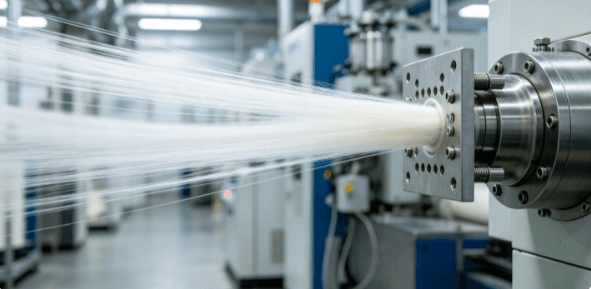
Core Advantages of Polyester Fiber Properties
1. Tough, Durable, and Built to Last
First off, polyester lasts way longer than traditional natural fibers. It beats regular natural fabrics by a mile when it comes to wear resistance and overall durability. Think about cotton products: they’re just not as strong, so they shed easily and wear out fast with regular use. Just think about your carpet or curtains — you don’t want them shedding all over the place after a few months, right? That’s why manufacturers pick polyester for a longer-lasting finish.
This durability also delivers real value for B2B businesses. Buyers get a raw material that holds up longer, so their finished products stay consistent in quality for years. For suppliers, using polyester cuts down on after-sales complaints and helps keep production costs under control.
2. Polyester Fiber Properties of Types for Every Possible Use
A lot of people assume polyester is just one basic, one-size-fits-all material — like cotton or down. But that’s so far from the truth. Think of down feathers: you’ve got goose down and duck down, each for different products. Polyester works the exact same way. There are dozens of specialized types made for all kinds of specific, complex needs.
Let’s take the two most common types as examples:
Virgin Polyester Fiber
lives up to its name: it’s made 100% from brand-new, pure raw materials derived from petroleum. It has awesome bounce-back, resists scuffs and abrasion, holds its shape really well, and stands up to heat without yellowing over time. Think about a white shirt: if you leave it damp out in the sun, it’ll definitely yellow.
But with virgin polyester? That won’t happen. Brands mostly use it for clothing fabrics that need high strength and a premium feel, plus home textiles that have to last through years of use and sun exposure — like the high-end tuxedos you’d wear to a fancy gala.
Recycled Polyester Fiber
on the other hand, comes from reclaimed materials: think plastic water bottles, scraps of old polyester fabric, and leftover waste from industrial textile production. Its biggest selling point is that it’s eco-friendly — it fits right in with the global push for sustainability — and it’s usually cheaper than virgin polyester too.
And those are just the basics. There are tons of other specialized types out there. Take fine-denier polyester, for example: it feels silky smooth, soft and springy, almost identical to real silk. If you have faux-silk sheets or pajamas at home, or a high-density winter puffer jacket, odds are it’s made with this kind of fiber.
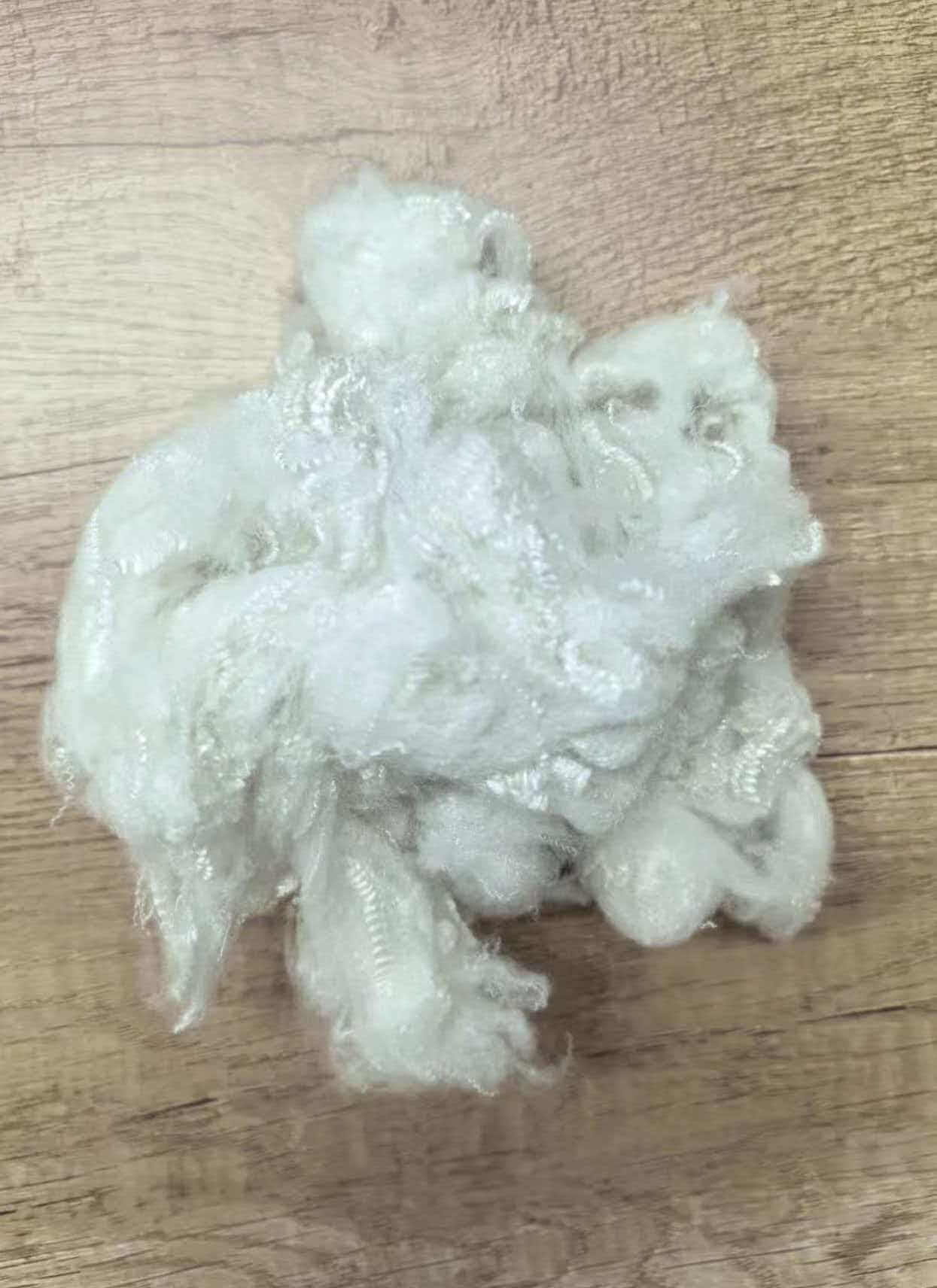
3. Budget-Friendly and Super Easy to Care for
Polyester is easy on your wallet and even easier to keep looking good. Natural fibers usually come with a steep price tag, mostly because they’re limited in supply and take tons of labor to harvest. If you’re working with a tight budget, or just want to test out a new material, polyester is such a solid pick.
I can totally speak from experience here: I used to be a total natural fiber loyalist, but these days, dropping thousands on a single down jacket just doesn’t feel worth it for most people. On top of that, all the fussy care rules — no machine washing, no direct sunlight — slowly killed the appeal for me.
Then I tried polyester, and honestly? It was a total game changer. You can toss it in the washing machine or wash it by hand — either works fine. Even if you cram it in the back of a closet for a whole year, it won’t lose its shape. Plus, since the fabric barely absorbs moisture, it doesn’t trap dust mites or grow mold. It’s basically my dream fabric.
Key properties of Common Polyester Fiber
Solid Polyester Staple Fibers (PSF)
First up, solid polyester staple fibers (PSF). There are four main categories, each built for a different job.
1. Cotton-Type Fine-Denier Staple Fiber
It feels smooth and delicate against your skin, with that luxe, silky soft texture. It’s the “soft cloud” of skin-friendly fabrics. Brands often use it for high-end clothing, knit fabrics, and soft wet wipes.
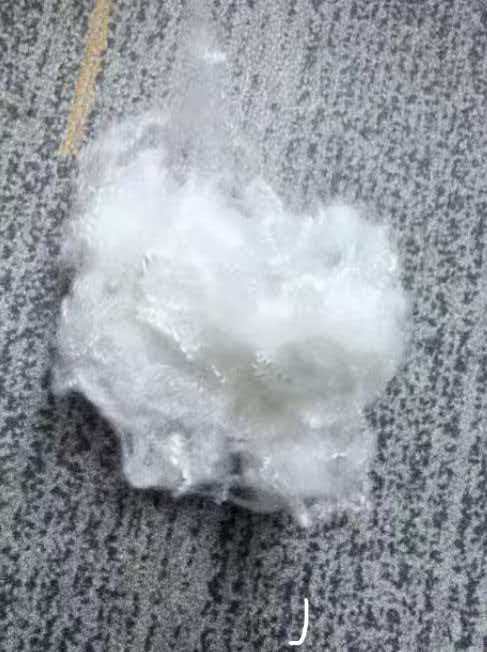
2. Medium-Coarse Denier Staple Fiber
If fine-denier fiber is a soft cloud, medium-coarse staple fiber is the tough workhorse of the group. It’s stiffer, super strong, and has great loft and bounce-back, like tiny little fiberglass rods that spring right back when you press down.
When it’s formed into webs or felt, it creates a thick, wear-resistant “fiber barrier” that stands up to pulling and abrasion, and handles high tension really well.
It works perfectly for non-woven products like geotextiles and filter cloths, heavy-duty workwear fabrics, and industrial fillers like soundproof felt and cushioning pads. It’s basically the backbone of industrial textile uses.
3. Wool-Type Coarse-Denier Staple Fiber
This type is made to mimic natural wool, and it beats wool by a mile when it comes to value. It has a tight, dense structure, with consistent strength and abrasion resistance, plus reliable loft and support — like stiff, realistic faux wool strands.
If you have someone who doesn’t work with fabrics feel blankets or faux fur made with this, they’ll absolutely think it’s real wool. It feels almost identical to natural fiber, but it’s way tougher: it won’t shrink, it won’t get eaten by moths, and it lasts way longer. Brands also use it a lot for thick, wool-look knit coats.
4. Wool-Type Extra-Coarse Denier Staple Fiber
This one’s thicker and longer than all the other staple fiber types — it’s the tough “big brother” of the family. It has extremely high rigidity and structural support.
It holds its shape and won’t flatten or sag over time, like tiny little solid wood posts. That sturdy build gives it consistent strength, resistance to repeated friction, and barely any shedding.
It’s mostly used for carpets and floor mats, plus plush toys and faux fur. Makes sense — the big brother handles the heavy-duty work.
3D Hollow Conjugated Polyester Fibers.
There are three main types: non-siliconized, siliconized, and down-like (often called “down alternative cotton”).
1. Non-Siliconized 3D Hollow Fibers
They feel dry and a little rough to the touch, no slippery or oily residue. Since there’s no silicone oil clogging the tiny gaps between fibers, air flows right through — those gaps are like built-in air vents — so they breathe really well.
(Quick note if you don’t know what silicone oil is: it’s an additive manufacturers use to make fibers feel smoother and softer against your skin.)
Brands use this type to make spray-bonded wadding and binder-free wadding — especially the rigid padding inside mattresses and sofa liners. It’s already mold and moth resistant, plus it’s super durable.
2. Siliconized 3D Hollow Fibers
Manufacturers add silicone oil during production, which makes the fibers feel smooth, soft, and fluffy. Squeezing a handful feels like holding a cloud of sun-warmed velvet — it feels almost exactly like real down.
It also naturally resists static, so you won’t get that crackly zap when you touch it. They work best for loose filling, like pillow inserts and stuffing for plush toys.
It’s soft, bounces back fast, and it’s a great budget-friendly down alternative.
Physical & Chemical Properties of Polyester Fiber
Just like any material, polyester has its own unique physical and chemical traits. Let’s break down its biggest advantages on both fronts.
Chemical Properties
First, it handles acid really well. At room temperature, dilute or weak acids barely react with it at all. Second, it doesn’t dissolve in common household or industrial solvents — things like water, ethanol, acetone, gasoline, and benzene — at room temperature.
It holds up perfectly through dry cleaning too, so it stays in great shape even with professional care. Plus, it stands up to sunlight better than cotton or nylon, so it holds up great for outdoor use.
Best of all? It’s 100% resistant to mold and moth damage. Completely.
Physical Properties
Now let’s talk about its physical superpowers.
It’s incredibly tough. Every single one of these traits checks the boxes for “durable, low-fuss, versatile” — that’s why it works in so many different scenarios.
At the end of the day, good material properties are all about making life easier.
Traditional natural fibers get eaten by moths all the time, and it’s such a headache. Polyester doesn’t have that problem at all, and that’s a huge win for its practical performance. If you live in a rainy, humid area, you’ve probably pulled clothes out of storage after a few months and found moth holes. Natural fibers are basically food for moth eggs, but polyester products never have that issue.
Compared to traditional natural materials, polyester has way better toughness and tensile strength — it’s basically the durability champion. Since it barely absorbs any moisture, it’s just as strong wet as it is dry. It won’t go soft and tear easily when it gets wet, unlike cotton.
1. Polyester Has Awesome Elasticity
Stretch it out, and it bounces back almost 100% to its original shape, like a spring. That’s why it can do things traditional natural fibers can’t when it comes to stretch and recovery. Its wrinkle resistance also blows natural fibers out of the water. Crumple it up in your bag all day, shake it out, and it’s smooth again. It’s just so low-fuss and long-lasting. That’s a big reason it’s such a low-maintenance material.
2. Polyester is Super Abrasion Resistant
Only nylon holds up better to constant rubbing and wear. It’s way more durable than cotton, viscose, or acrylic. That’s why it lasts so long even with heavy daily use — it’s basically the “longevity champion” of fabrics.
3. It’s a Great Electrical Insulator
That makes it super useful in electrical and industrial settings. It’s a key material for all kinds of electrical safety gear and industrial parts. All these one-of-a-kind traits are what make polyester such a high-performing, versatile material.
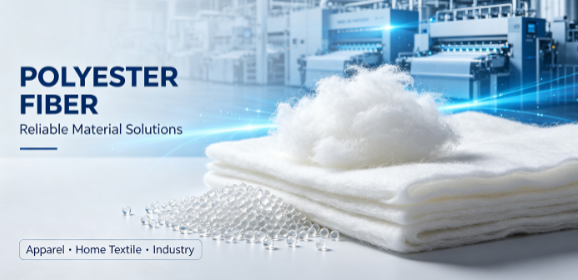
Polyester fiber—a highly versatile material
Polyester will keep evolving in two big directions: greener production methods, and smarter, more functional designs. With all its unique traits, it’ll stay one of the top picks even alongside all the traditional fiber options out there.
Since you can recycle polyester over and over again, it cuts down on waste and carbon emissions a lot — great for the planet, and great for keeping costs in check.
Polyester fiber won’t just stick to clothing and home textiles either. In the future, it’ll branch out into new fields like automotive filtration systems and flexible wearable tech. And as technology keeps advancing, it’ll fit even better into our daily lives and meet all kinds of industrial needs.
Post time: Jul-09-2026