
Weihigh's subsidiary, Hebei Jinyi Polyester Fiber Co., Ltd., upgraded a new recycled polyester fiber production line in January 2026. This line has a daily output of 30 tons of recycled polyester fiber. All three of our factories have now been upgraded with this new equipment.
If it were just a simple production line upgrade, it wouldn't be anything special, but this line is extraordinary. We've made significant upgrades compared to before. Let's start with the initial feeding stage.
Automated PET flake feeding hopper VS. Traditional manual feeding
Ensuring continuous and stable supply, reducing production fluctuations. Traditional manual feeding is prone to problems:
- Inconsistent feeding speed (humans are prone to slacking off)
- Raw material accumulation and supply shortages
- The probability of error is higher with manual operation, plus labor costs are also relatively high.
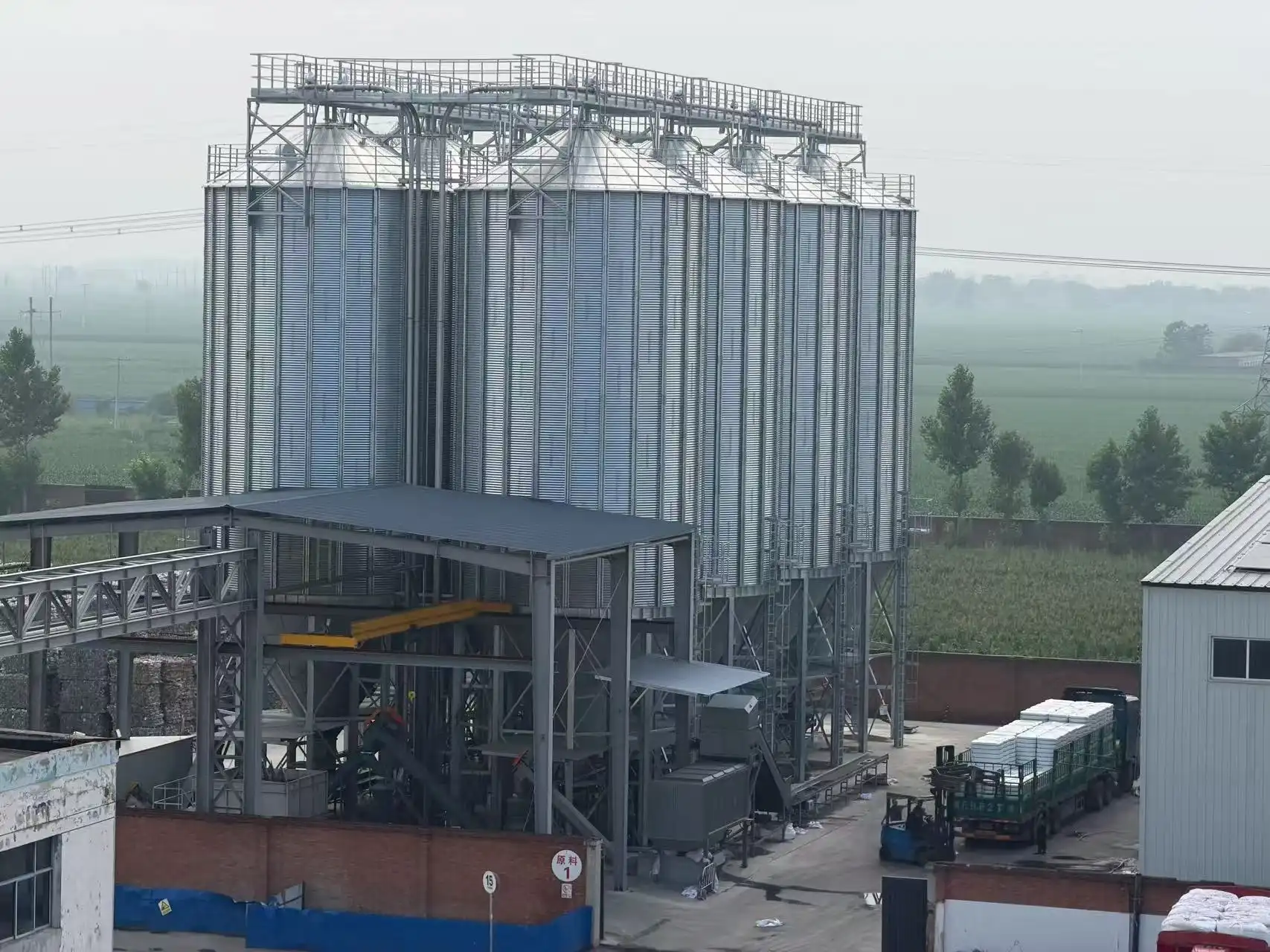
By 2026, Weihigh had upgraded all three of its factories with fully automated feeding silos on their new production lines. Through level sensors, conveying systems, and automatic control, these silos achieve:
- Automatic level detection
- Automatic replenishment
- Uniform feeding of PET bottle flakes/recycled chips/fiber raw materials
This ensures that the recycled polyester staple fiber produced subsequently exhibits:
- Stable melt extrusion
- Stable spinning pressure
- More uniform fiber denier
What causes batch-to-batch variations in polyester staple fiber?
I believe that for all buyers, regardless of your industry, the most pressing concern is the significant batch-to-batch variation in raw materials, leading to unstable polyester fiber performance. We even hope that each order will not differ significantly from the previous batch.
The main reasons for this problem are:
Weihigh's approach completely eliminates the problem of large batch-to-batch variations because the automated feeding silos precisely control the raw material ratios, and fully automated mixing eliminates the possibility of errors. Furthermore, the feeding speed and mixing are more uniform.
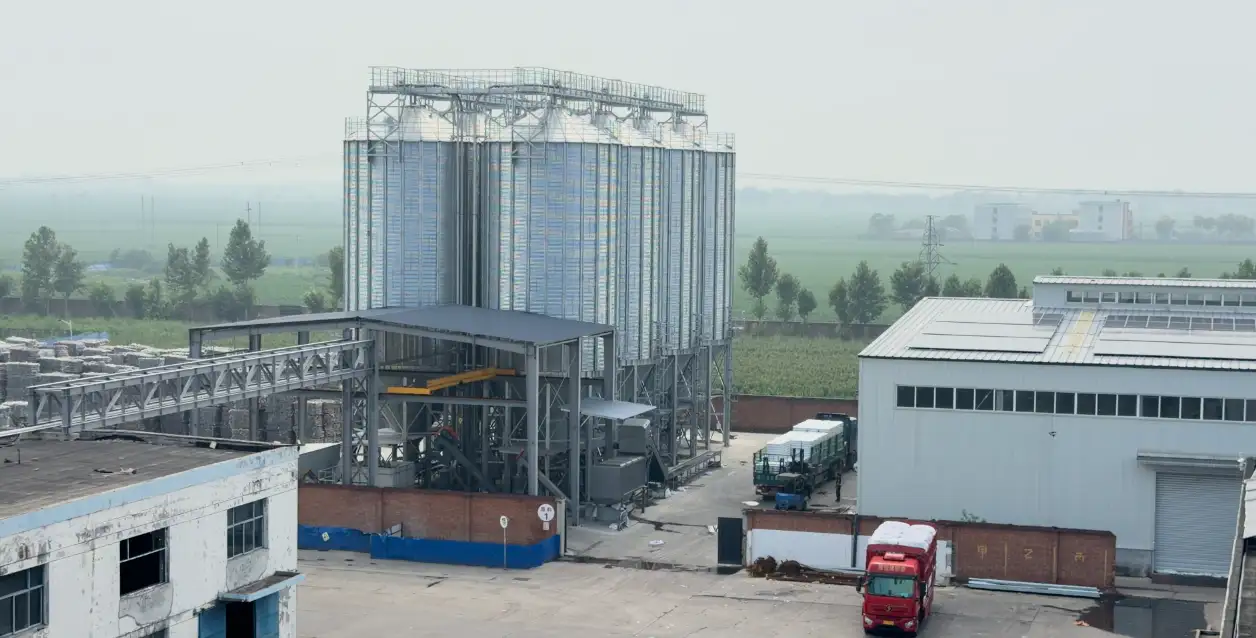
This effectively reduces problems such as uneven polyester fiber thickness, large strength fluctuations, and significant color differences at the source. It also significantly reduces the proportion of defects.
This is especially important for the production of:
Reducing labor costs and increasing automation.
Traditional manual PET bottle flake feeding has the following problems:
- Requires multiple people to handle the materials – increasing costs
- Dusty working environment – raw material contamination
- High labor intensity – reducing employee stress
- Staff instability affects production – errors are inevitable with traditional manual feeding.
Weihigh's automatic feeding hopper can achieve the following:
- Regularly replenishing raw materials + monitoring equipment operation
- Number of feeding workers
- Human error
- Downtime
What causes contamination of polyester staple fiber raw materials?
The core reason is impurities contaminating the raw materials. Recycled polyester fibers are very sensitive to impurities, and manual feeding easily introduces dust and foreign objects.
How does Weihigh handle this?
Weihigh's automatic feeding hopper is very powerful.
It can typically be used in conjunction with:
Reducing external contamination.
How to ensure more stable quality of polyester staple fiber?
Material drying is the most crucial step in ensuring the quality of polyester staple fiber. Many common problems—unstable elongation, poor fiber strength, numerous defects, large color differences, and large batch variations—are primarily caused by the drying process.
Many papers have long demonstrated the importance of drying time for PET bottle flakes.
Both excessively long and short drying times are detrimental to PET bottle flakes. Too long a drying time will yellow the raw material. Too low a drying time will result in insufficient raw material supply. Therefore, drying is one of the most time-consuming and energy-intensive steps in PET processing.
The Importance of Drying for PET Bottle Flakes
PET has strong hygroscopic properties. If the moisture content is too high before processing, it will cause hydrolysis of the PET macromolecular chains during high-temperature melt extrusion. This not only reduces the molecular weight and quality of the PET, but also generates a large number of bubbles during molding, affecting the appearance and internal quality of the product. This leads to problems such as reduced strength, unstable elongation, and poor color of the PET fibers, severely limiting the application of recycled polyester bottle flakes in high-end fields.
Multiple papers indicate that vacuum drying is the best drying method, as it reduces PET bottle flake loss and achieves efficient dehydration.[References]
Fully Enclosed Drum Dryer – Improving Polyester Fiber Quality
Vacuum Efficient Drying of PET Bottle Flakes/Granules
The biggest highlight of Weihigh's updated equipment is this fully enclosed drum dryer, which is a vacuum dryer.
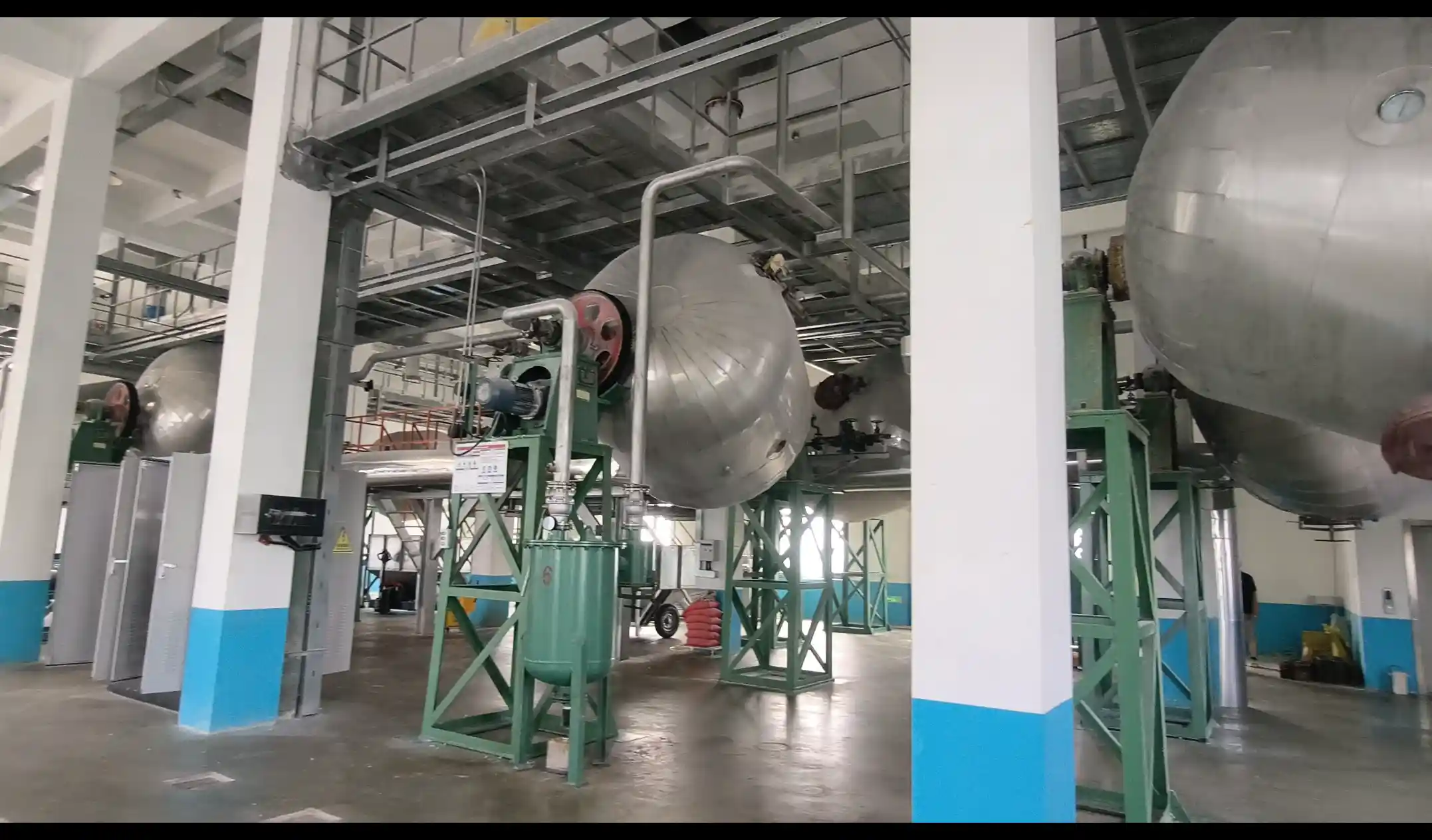
Its biggest advantage is the use of vacuum negative pressure, resulting in a shorter drying time and ensuring more stable and consistent quality.
Compared to traditional open-type drying equipment, its greatest value is not simply "drying away moisture," but also improving fiber quality stability, energy saving, and production environment control.
Reducing Moisture Fluctuations
Moisture content control is crucial in polyester staple fiber production.
A fully enclosed drum can:
- Maintain stable hot air circulation
- Reduce the entry of humid air from outside
- Control drying temperature and residence time
- Ensure a more uniform overall moisture content in the fiber
Reducing Fiber Contamination
Traditional drying equipment easily gets dust inside, rendering previous cleaning efforts largely useless. It's also highly susceptible to oil contamination, significantly lowering the quality of the polyester fibers produced, often failing to meet the high quality standards of countries like Europe and Japan.
Compared to traditional semi-enclosed drying equipment, Weihigh's fully enclosed drum:
- Isolates materials from the outside environment
- Reduces dust contamination
- Maintains fiber cleanliness
This is an advantage for export markets (Japan, Europe, and America's filling factories).
Furthermore, the most frequent feedback from customers using down substitute filling fibers, pillow fillings, and toy fillings is:
- White appearance
- Cleanliness
- Odor control
This allows Weihigh to guarantee product quality from the source, ensuring the quality of recycled polyester staple fibers.
How to improve the bulk of polyester fibers?
Many customers ask us: Why can Weihigh achieve a higher bulk than other brands' fibers with the same specifications? The secret lies in our fully enclosed rotary drum dryer on our production line.
Higher drying temperatures aren't always better for polyester fibers. Poor temperature control can lead to:
Poor temperature control can cause:
- Fiber shrinkage
- Decreased crimp
- Hardened feel
- Reduced bulk
Fully enclosed rotary drum dryers eliminate these problems:
They precisely control the temperature because the tumbling action ensures more even heating and residence time.
Therefore, they better serve customers who value resilience, bulk, and softness.