
How Good Is 100% Recycled Polyester?
If you have ever looked at a clothing label or even sought out textile materials to make your products, I am sure you’ve spotted the term 100% recycled polyester.
The advent of sustainability that drives both consumer and business entities in recent years has led to recycled polyester being used for apparel, home textiles, bags, automotive interiors and industrial products.
One inquiry that seems to persist in Google searches, though:
Is 100% recycled polyester high quality?
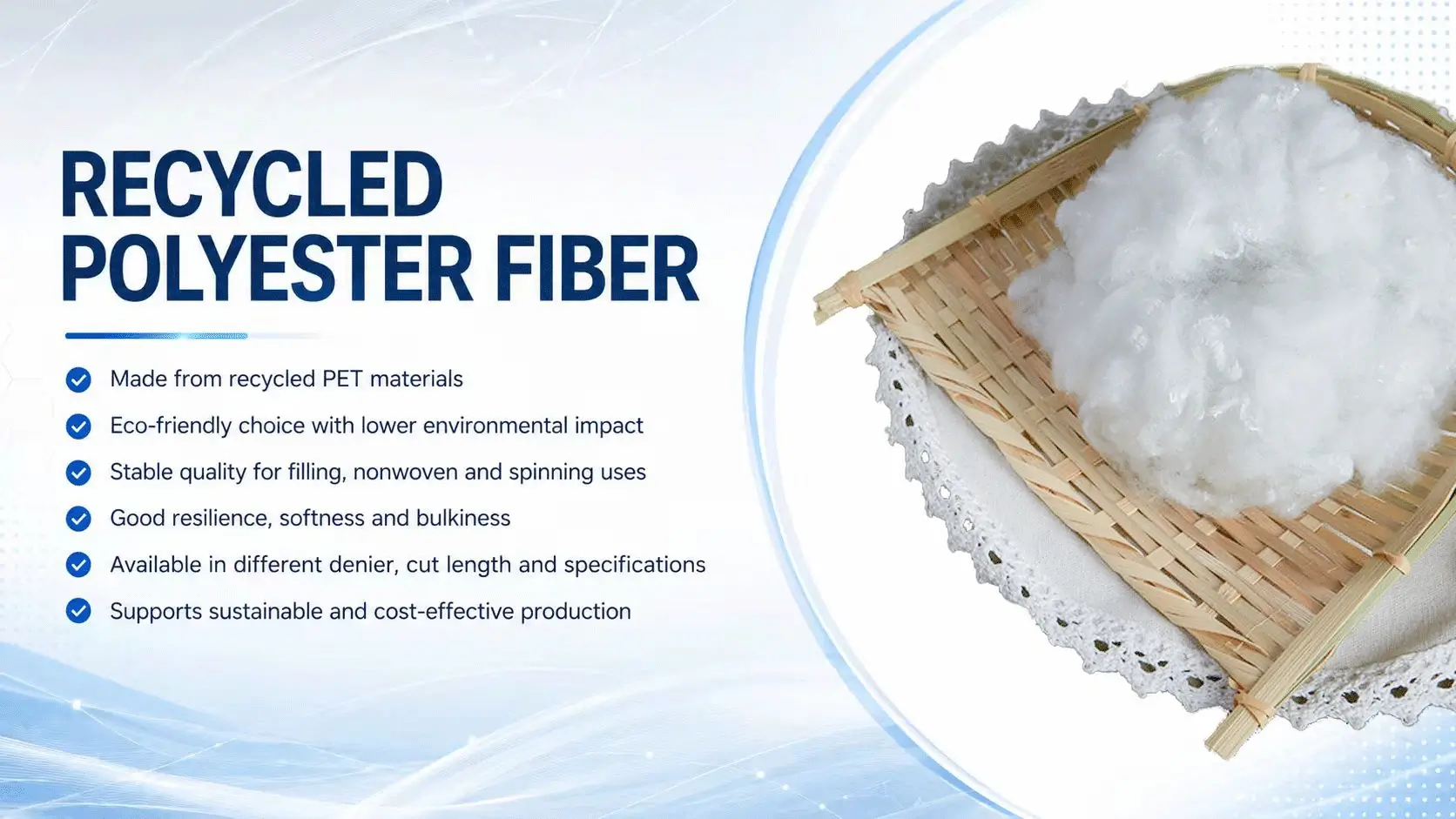
The short answer—which I should also mention comes with a few caveats—is yes.
The most advanced recycled polyester can offer same durability, strength, look and feel as virgin polyester. The ultimate quality is not determined by whether the fiber is recycled, but rather depends on the raw material, recycling technologies, manufacturing process and subsequent quality standards.
Clothing brands, wholesalers and product developers must know these differences before selecting a supplier. From a consumer perspective, understanding how recycled polyester stacks up vs. virgin polyester will help inform if the latter is worth ordering as a quilted skirt.
This article covers how recycled polyester is made, whether it is an inferior quality fabric compared to virgin polyester, its pros and cons as well as high-quality recycled polyester characteristics to look for before making a purchase.
Short Answer: Is 100% Recycled Polyester High Quality?
Yes. The proposed solution is to produce 100% recycled polyester, a high-quality material created with high-quality recyclable PET and modern technology.
Many people still believe that recycled materials are always inferior. That probably was accurate many years ago when recycling technologies were much less sophisticated. On the other hand, in the today situation top fiber producers manufacture to effective almost virgin polyester same utilizing recycled polyester.
Even internationally acclaimed products, ranging from outdoor clothes to sportswear or furniture vendors are incorporating the recycled polyester into high-end items without losing the edge.
Recycled fibre in itself is not the guarantee of quality; it depends how the fibre is produced.
Does recycled polyester quality match virgin polyester?
The answer is usually yes in most of the applications.
Recycled polyester for modern use retains many performance characteristics of virgin polyester such as:
High tensile strength
Excellent abrasion resistance
Good dimensional stability
Wrinkle resistance
Fast drying performance
Color consistency
Long service life
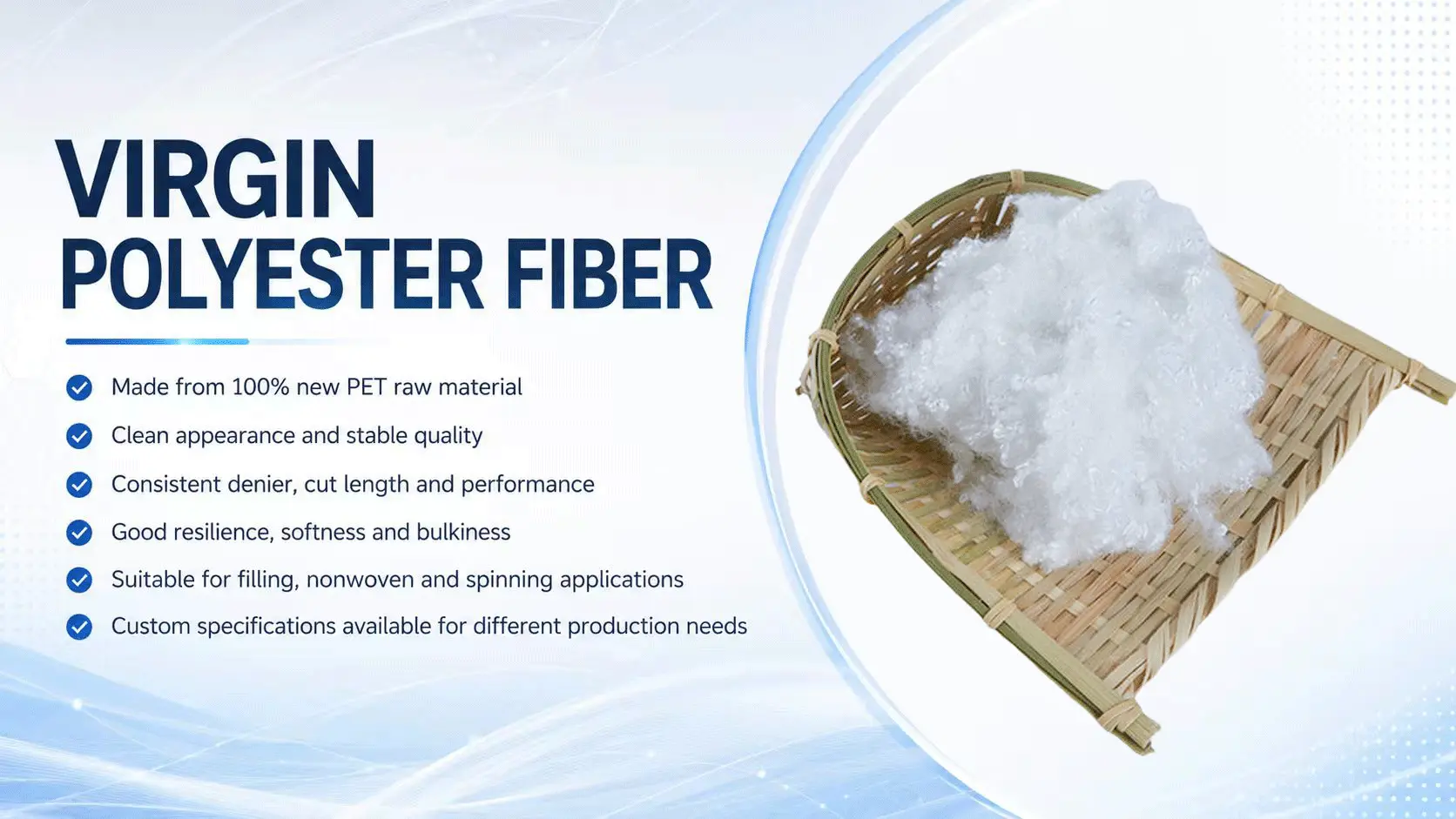
In the case of most clothing, nonwoven fabrics, industrial felt products, upholstery and filling materials, end users are unable to reliably tell any difference from virgin polyester in terms of price or performance.
Yet inferior recycled polyester could be contaminated or present differing fibre lengths, reducing durability and consequently performance during processing.
This is also why it really matters much more to choose a reputable manufacturer than recycled over virgin polyester.
What determines recycled polyester quality?
Several important factors determine the recyclability of polyester.
Raw material quality
The highest quality recycled polyester comes from sorted PET bottles or clean post-industrial waste.
Poor-quality feedstock may contain:
PVC contamination
Mixed plastics
Dirt
Metal residues
Colored plastics
These contaminants degrade the fiber strength and uniformity.
Recycling technology
Advanced recycling systems include:
Hot washing
Automatic sorting
High-temperature filtration
Melt purification
Precision extrusion
These processes eliminate contaminants, rendering stable physical properties to final products.
Fiber manufacturing process
Fiber quality also depends on:
Polymer viscosity
Drawing ratio
Crimp consistency
Fiber cutting accuracy
Heat setting
Today production lines are able to produce recycled polyester staple fiber with performance virtually the same as virgin fibers.
Quality management
Regular testing for the reliability of manufacturers remains essential:
Fiber diameter
Tensile strength
Elongation
Moisture content
Color consistency
Impurity levels
Continuous quality control is achieved by monitoring each production batch to meet customer specifications.
Expert Insight
The first misconception is that ’100% recycled’ equals premium quality.
Two recycled polyester fibres can be quoted as 100% recycled and still act very differently in reality.
The specification of a recycled high quality polyester fiber is:
Clean recycled raw materials
Stable manufacturing processes
Professional quality inspection
International certifications
Consistent production standards
Much more on why experienced buyers assess suppliers – not just the marketing claims.
What Is 100% Recycled Polyester?
But before determining quality, let us firstly understand what 100% recycled polyester is.
Recycled polyester (known as rPET or recycled polyethylene terephthalate) is a form of polyester manufactured from recycled PET plastic due to newly produced petroleum-based raw materials.
The finished fiber has an identical chemical composition to virgin polyester.
But it is basically the same polymer, just from a different source of raw material.
How recycled polyester is made
Typically, the manufacturing process looks something like this:
Step 1 – Collection
Recycling systems gather used PET bottles or clean polyester waste.
Step 2 – Sorting
Materials are sorted by:
Plastic type
Color
Quality
Contamination level
Better sorting produces better fiber.
Step 3 – Washing
The plastic is then cleaned to remove:
Labels
Glue
Dirt
Food residue
Oils
The final fiber quality is highly influenced during this stage.
Step 4 – Shredding
The clean PET bottles are then ground into small flakes.
Step 5 – Melt and filtration
These flakes are then melted down and additionally filtered to eliminate microscopic contaminants.
Step 6 – Fiber spinning
The purified polymer is then extruded through spinnerets into continuous polyester filaments.
Step 7 – Drawing and crimping
The fibers are further drawn out in order to improve molecular alignment and strength.
Afterwards, they are crimped to increase bulkiness and processing efficiency.
Step 8 – Cutting
Finally the fibres are cut to prerequisite staple length according to the final application.
The end product can be for the textile, felt, filler, insulating material, automotive material used in manufacturing furniture and industry.
Bottle-to-fiber vs. textile-to-textile recycling
Recycled polyester does not all come from the same sort of source.
Bottle-to-fiber recycling
And this is by far the most common recycling method today.
Source:
PET beverage bottles
Advantages:
Stable quality
Mature technology
High production efficiency
Widely available
The majority available polyethylene (PET) for staple fiber is created via this course.
Textile-to-textile recycling
The process upcycles postconsumer polyester clothing and textile waste into new fibers.
While it encourages a more circular economy of textiles, it is also more complicated because second-hand fabrics tend to be composed of:
Mixed fibers
Dyes
Finishes
Sewing threads
Elastic materials
Given ongoing improvements in recycling technologies, textile-to-textile recycling will become even more critical to sustainable production.
What does “100% recycled” actually mean?
Many buyers misunderstand this label.
100% recycled polyester: This indicates that every polyester belonging to the fiber is derived from the recycling of polyester raw materials, rather than virgin PET produced through polycondensation.
It does not necessarily mean:
the product itself is recyclable,
the carbon costing of the manufacturing process,
with every other component (trims, coatings and brackets) constructed from recycled materials too.
As an example, a jacket made out 100% recycled polyester may still contain virgin zipper parts, bands of elastic and sewing threads or waterproof coatings.
Hence, buyers should look at claims carefully and do due diligence about certifications, transparency in manufacturing processes and authenticity of the supplier.
Recycled Polyester vs Virgin: Is It As Durable?
High-performance recycled polyester is as durable as virgin polyester for most applications. New advancements in recycling technology enable manufacturers to engineer fibers that have nearly indistinguishable mechanical properties from virgin polyester, so recycled PET can be used for everything from sportswear and upholstery to automotive interiors and industrial nonwovens.
But just because an item may be “100% recycled polyester” doesn’t mean it won’t wear out quickly! The core difference is with the quality of raw materials, process and supplier’s quality control system.
When sourcing commercial products with recycled polyester that forgoes the first question and focuses only on whether the fiber is recycled, misses far more important questions.
Tensile Strength
Tensile strength shows how much force a fiber can take before it breaks.
Recycled polyester can achieve virgin polyester like tensile strength when produced from clean PET feedstock and innovative spinning technologies. This is precisely why many of the premium sportswear brands, luggage manufacturers and furniture companies use recycled polyester with confidence while maintaining product reliability.
Low-grade recycled polyester can degrade if produced from contaminated feedstock or via unstable processes. Strings that have been fatigued in an industrial process or non-recycled thermoplastics (for instance, mixed plastics or poor filtration) can result in a fiber structure with lower resistance to breakage during fabricating and article usage.
Buyer Tip
If you are buyer and interested in knowing about supplier then just ask whether they test tensile strength for each batch of production. The sign of stable quality is consistent testing.
Abrasion Resistance
Abrasion ResistanceThis is a measure of the material¿s resistance to repetitive friction and rubbing.
One of the reasons polyester ensures versatility is its incredible wear resistance. Frayed T-shirts made from recycled polyester keep that advantage if the latter is done in a proper manner.
The products themselves — made from high-quality recycled polyester fiber — can survive years of recurrent utility in applications that comprise:
Backpacks
Upholstery fabrics
Office furniture
Automotive interiors
Felt products
Outdoor equipment
Contrary to that, poor quality fibers will most probably wear much quicker due to varying filament diameters and impurities.
Shape Retention
When evaluating quality consumers associate it with the degree to which a product can retain its shape.
Recycled polyester has good dimensional stability, which means it doesn’t stretch, shrink or deform during normal wear.
This makes it suitable for applications that need long-term stability of structures, including:
Acoustic felt panels
Cushion filling
Decorative felt
Apparel
Home textiles
Much of this stability is guaranteed by proper heat setting in the manufacturing process.
Colorfastness
Another worry among some consumers is that recycled materials can fade faster.
In truth, colorfastness has more to do with how the polyester is dyed than whether or not the polyester is recycled.
Due to its high quality, recycled polyester dyes brilliantly, with colors as vibrant and long-lasting as virgin.
The following are high-performing for commercial dyeing and finishing processes:
Washing
Light exposure
Friction
Perspiration
Moisture and Weather Resistance
Recycled polyester absorbs much less moisture, just like virgin 2 polyester.
This offers several advantages:
Quick drying
Mold resistance
Low moisture absorption
Reduced bacterial growth
Stable performance in humid environments
All these characteristics help bonded recycled polyester outperform virgin polyester in outdoor products and high-humidity applications.
Expected Service Life
Investors most often ask this question:
How long does a recycled polyester garment last?
Otherwise,under normal conditions the quality recycled polyester can go on for many years.
Its optimum service life is mostly influenced by:
Fiber quality
Fabric construction
Product design
End-use environment
Maintenance
Much like the vast majority of consumer and industrial products, recycled polyester delivers a lifetime that is comparable to virgin polyester.
Key Takeaway
In fact, if that recycled polyester was from a well thought-of manufacturer who too has modern production technology, the difference in durability (practically speaking) to virgin polyester would be negligible.
Instead of asking:
“Is recycled polyester durable?”
A better question is:
“Is this recycled polyester from a trusted supplier, who has consistent quality guarantees?”
How you answer that question will have far greater consequences than on the actual performance of your deliverables.
Recycle Polyester vs Virgin Polyester: What is the Difference?
Even though recycled polyester and virgin polyester have the same chemical structure, their source, environmental impact and sometimes cost are different.
Knowing these differences allow the buyers to select the perfect material for their products.
Performance Comparison
Performance-wise, premium recycled polyester is as good as virgin.
|
Property |
Recycled Polyester |
Virgin Polyester |
| Strength | Excellent | Excellent |
| Durability | Excellent | Excellent |
| Wrinkle Resistance | Excellent | Excellent |
| Quick Drying | Excellent | Excellent |
| Dimensional Stability | Excellent | Excellent |
| Abrasion Resistance | Excellent | Excellent |
There is no practical difference in performance for the majority of commercial applications.
Appearance Comparison
Recycled polyester is thought to look or be lower quality.
Such worries are eliminated by the production techniques of today.
High-quality recycled polyester can achieve:
Smooth surface
Uniform fiber thickness
Consistent color
Soft hand feel
Excellent appearance
The finished product seldom allows consumers to differentiate between recycled and virgin polyester via touch or sight.
Environmental Impact
This is a place where recycling polyester can have the largest benefit.
This helps via the fact that recycled polyester uses previously created PET as opposed to new petrochemical polymers.
Reduce plastic waste
Lower demand for fossil resources
Decrease landfill volumes
Support circular manufacturing
Reduce overall environmental impact
Recycled polyester is then often a good choice for brands that aim to make their products more sustainable.
Cost Comparison
Price relates to market status, availability of supplies and any certification requirements.
This will cost more than virgin polyester in some markets due to:
Collection costs
Sorting processes
Recycling technology
Certification expenses
Global demand has surged however, and better recycling efficiencies have contributed to closing that price gap.
Most brands are now seeing that the added sustainability benefit is worth even a small price difference.
Which polyester fiber Should You Choose?
This very much depends on your priorities.
Select recycled polyester if you value:
Sustainable sourcing
Reduced environmental impact
Brand ESG initiatives
However, recycled materials data is still limited and not all producers can meet demand for recycled content.
Green product certifications
Use virgin polyester when your application needs highly specialized technical properties which are only available through specific virgin polymer formulations.
Recycled polyester strikes an excellent balance of performance and sustainability for most consumer products, though.
Advantages of 100% Recycled Polyester
Recycled polyester on the other hand is more popular and not just because of environmental concerns.
The main reason why manufacturers, brands, and consumers are still using recycled polyester is because it provides a unique combination of performance, versatility, and sustainability.
Let us take a glance at its main benefits.
Excellent Durability
The resiliency of recycled polyester is one its biggest pros.
It resists:
Stretching
Tearing
Abrasion
Shrinking
Wrinkling
All products continue to look as good as new after multiple uses.
Resilient: Recycled polyester is also a durable material, making it ideal for products built to last the test of time.
Lightweight but Strong
Recycled polyester has all the strength of virgin polyester, but weighs less.
This combination is extremely useful particularly for:
Sportswear
Travel bags
Outdoor equipment
Automotive interiors
Home furnishings
Light materials create more comfortable but cheaper transportation.
Moisture-Wicking Performance
Polyester does not absorb water at all.
Instead, draws moisture away from the skin and allows fabric to dry quickly.
This makes it popular in:
Athletic apparel
Outdoor clothing
Performance textiles
Footwear
Consumers want a product that stays comfy when working out.
Wrinkle Resistance
Recycled polyester is a naturally wrinkle-resistant.
The products need less ironing and to preserve an orderly look, both after being packed or transported.
This is particularly appealing for luggage and casual wear.
Easy Maintenance
Extra easy to take care of Recycled polyester
Most products can be:
Machine washed
Quick dried
Stored without special treatment
It is also resistant to mildew and shrinkage, which reduces long-term maintenance costs.
Supports Sustainable Manufacturing
Sustainability has become a key buyer behaviour driver for many businesses.
Recycled polyester can make it easier for companies that:
Meet corporate sustainability goals
Improve ESG performance
Support circular economy initiatives
Appeal to environmentally conscious customers
Finally, buyers are looking beyond just price and quality of the product(s); they are assessing environmental responsibility as a criterion when evaluating suppliers.
Consistent Performance Across Industries
Gas recycled single-handedly LPRE is sewn into polyester; this GoGoe lace crossover is then chopped — markers are one of the greatest advantages of sutured simlus.
Today it is widely used in:
Fashion apparel
Furniture
Automotive interiors
Acoustic materials
Felt products
Nonwoven fabrics
Home textiles
Industrial insulation
Packaging
Its many different applications show that recycled polyester can already be viewed not just as an alternative material but as a solution for contemporary production methods.
Post time: Jul-21-2026