
Does polyester stretch? The answer depends more on the finished construction than the fiber name. Knitted loops, textured yarns, and spandex blends can add movement, while ordinary woven polyester usually stays stable. This guide helps product developers and material buyers compare construction, stretch direction, recovery, and test methods before specifying a fabric or polyester staple fiber.
Does Polyester Stretch? The Short Answer
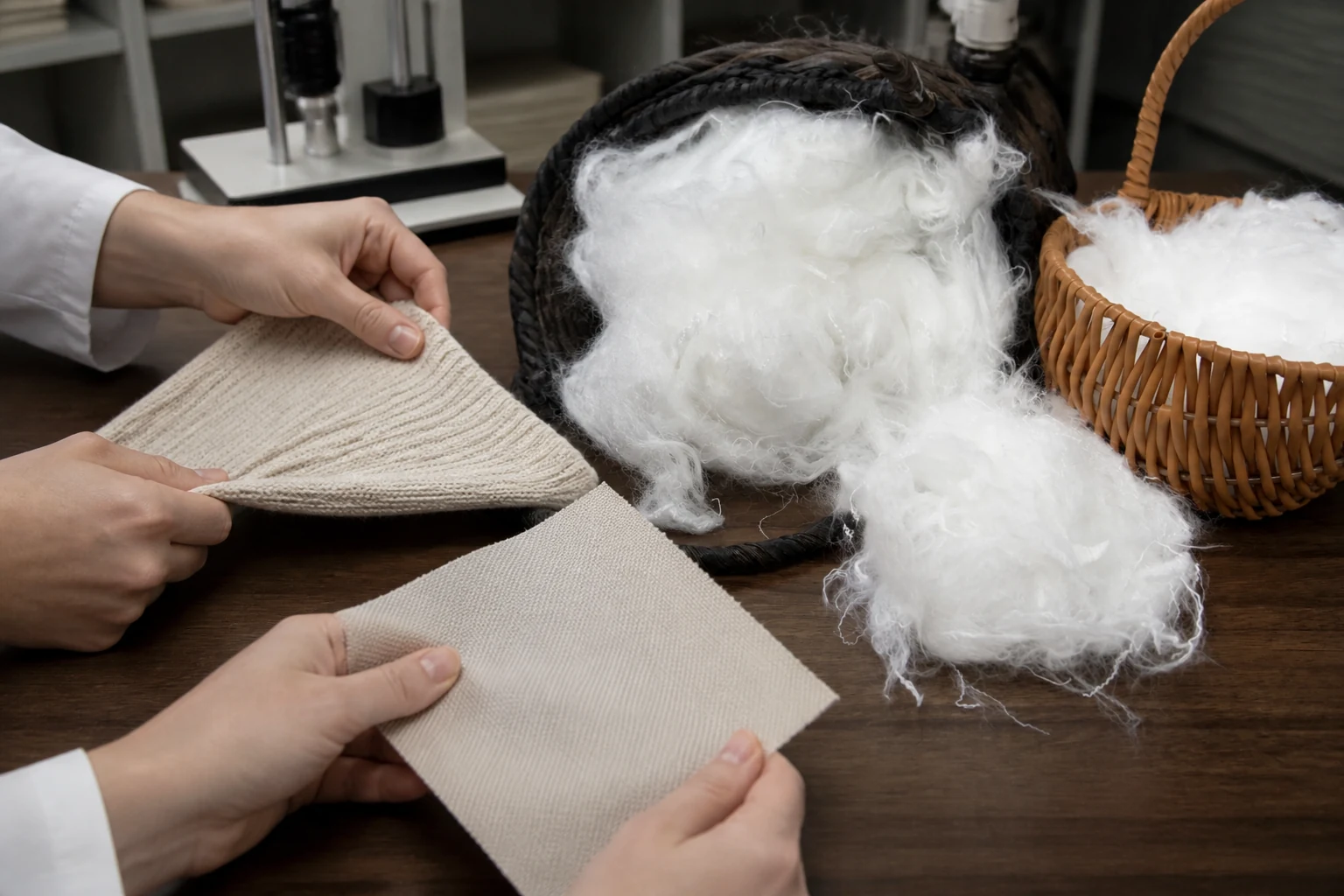
If you are asking whether polyester is stretchy, the practical answer is: sometimes. Standard polyester is not an elastic fiber like spandex, but it can extend under force. Most of the stretch you feel in a finished fabric comes from its construction, yarn design, or blend, so there is no single percentage that applies to every polyester material.
A 100% polyester knit may flex because its loops can open and move. A conventional woven polyester fabric usually has much less give along the warp and weft. Add spandex or elastane, and the fabric can gain a wider stretch range and stronger recovery. The fiber label is useful, but it never tells the whole story.
Why Polyester Fiber and Polyester Fabric Stretch Differently
You need to separate three material levels: fiber, yarn or web, and finished fabric. Polyester fiber can be spun into yarn, formed into a nonwoven web, or used as filling. Each subsequent production step changes how the material responds to force.
That is why two products labeled “100% polyester” can behave differently. The chemical fiber name is the same, but the yarn shape, fabric geometry, density, finishing, and test direction may not be.
Fiber Elongation Is Not Fabric Stretch
Fiber elongation describes how a fiber extends during a tensile test, often up to a defined load or break. Fabric stretch describes how a constructed material extends under a specified force. These results answer different questions.
For example, a polyester staple fiber data sheet may report elongation together with denier, tenacity, cut length, and crimp. That number does not mean a shirt or nonwoven made from the fiber will comfortably stretch by the same percentage. Spinning, yarn design, fabric construction, bonding, finishing, and the test conditions all intervene before that fiber becomes a finished material.
Stretch, Growth, and Recovery Are Separate Results
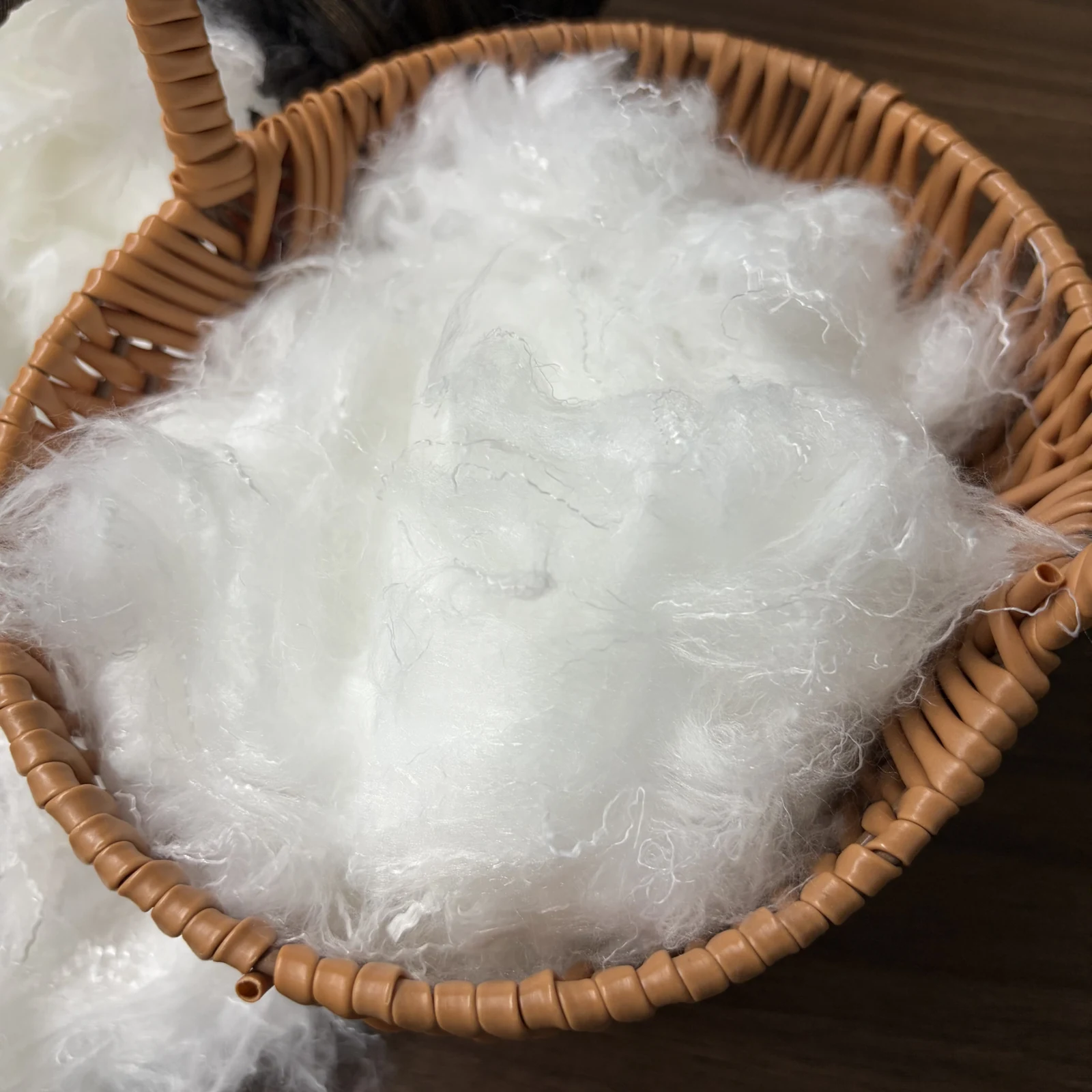
Stretch tells you how far a fabric extends under load. Growth describes the extension that remains after the load is removed. Recovery tells you how well the material returns toward its original dimensions.
This distinction matters because a material can feel easy to pull yet recover poorly and become baggy. ASTM D3107, a method for woven fabrics made with stretch yarns, treats fabric stretch, growth, and recovery as separate calculations. It also distinguishes these measurements from breaking elongation.
How Knit, Woven, and Nonwoven Polyester Behave
Fabric structure usually tells you more about usable stretch than the word polyester alone.
| Polyester structure | Typical behavior | Where movement comes from | Key performance check |
|---|---|---|---|
| Knit jersey or interlock | Often has noticeable crosswise give | Loops open and rearrange under force | Direction, recovery, growth, weight |
| Knit fleece base | Usually has some mechanical give | Knitted base structure | Recovery after wear and laundering |
| Plain woven, twill, chiffon, or shell fabric | Usually low stretch along warp and weft | Limited yarn movement; slight bias give may occur | Warp, weft, and bias behavior |
| Engineered mechanical-stretch woven | Low to moderate controlled stretch | Textured yarn, crimp, weave design, or finishing | Test method, direction, recovery |
| Polyester-spandex fabric | Often wider stretch with better snap-back | Elastic fiber plus knit or woven structure | Spandex content, direction, recovery, wash durability |
| Polyester nonwoven | Varies widely by web and bonding system | Fiber orientation, entanglement, bonding, and basis weight | Machine direction, cross direction, load, permanent growth |
Garment names do not settle the question either. A polyester jersey dress may flex through its knit loops, while woven jeans or office pants need elastic fiber or an engineered construction for reliable comfort stretch. If fit matters, assess the main fabric rather than assuming a stretchy waistband or side panel represents the whole garment.
A nonwoven should not be called stretchy simply because it contains polyester. A needle-punched web, spunlace material, and thermally bonded wadding can have very different extension and recovery. Their bonding and fiber orientation must be considered with the fiber specification.
How Yarn Design, Stretch Direction, and Elastic Fiber Change Performance
Three variables add information beyond the basic structure comparison: yarn design, stretch direction, and elastic-fiber content.
Yarn Design and Stretch Direction
Textured or crimped yarn can create mechanical stretch because the yarn structure straightens under force. Fabric density, yarn twist, heat setting, and finishing also change the result.
Direction matters just as much. A material may stretch mainly across its width, in both length and width, or only on the diagonal. Marketing terms such as 2-way stretch and 4-way stretch are useful starting points, but they should be supported by a defined test and recovery requirement when performance matters.
Spandex or Elastane Content
Spandex and elastane refer to the elastic-fiber category used to create larger, recoverable extension. The US Federal Trade Commission textile labeling guide recognizes elastane as the ISO name corresponding to spandex and requires covered textile products to disclose fiber names and percentages.
A label such as 95% polyester, 5% spandex is therefore a strong clue that the fabric was designed to stretch. It is not a performance guarantee. Two fabrics with the same ratio can differ because of knit or weave, yarn placement, weight, finishing, and stretch direction.
Does 100% Polyester Stretch?
Yes, some 100% polyester fabrics stretch mechanically, but the amount varies. With no spandex present, usable give comes from yarn design or the finished geometry.
Example-illustrative, not a laboratory result: Place a 100% polyester jersey beside a 100% polyester woven shell. The jersey will usually give more across its loops, while the shell will feel firmer along warp and weft. If the jersey returns neatly after release, it may suit comfort movement; if it stays enlarged, it offers extension without the recovery a close-fitting product needs. This is a decision example, not a customer case or a report of samples tested by Weihigh.
Polyester vs Polyester-Spandex: Which Performance Do You Need?
Choose between a stable 100% polyester construction and a polyester-spandex stretch fabric by starting with the end-use requirement-not with the assumption that more stretch is always better.
| Performance need | 100% polyester may work when | Polyester-spandex may be better when | Decision evidence |
|---|---|---|---|
| Stable shape | A woven or stable knit should resist movement | Extra elasticity is unnecessary | Dimensional stability and growth |
| Moderate comfort movement | A knit or engineered mechanical-stretch structure provides enough give | More snap-back is required | Directional stretch and recovery |
| Close fit or high mobility | A tested specialty construction meets the range | The product must follow repeated body movement | Stretch range, recovery, seams, wash cycles |
| Nonwoven industrial use | Web extension is controlled through orientation and bonding | Spandex is rarely the only design answer | MD/CD extension, load, growth, bonding |
| Filling and cushioning | Loft and compression recovery matter more than garment stretch | Elastic fabric terminology may not apply | Bulk, compression recovery, crimp, hand feel |
Extra stretch can also create trade-offs in stability, cutting, sewing, bonding, recycling, heat response, and long-term growth. For fitted dresses, jeans, uniforms, or activewear, define the movement the product must allow and how closely it must return to shape. Then compare finished samples against that requirement instead of assuming the highest spandex percentage is automatically the best choice.
How to Check Polyester Stretch Before You Buy or Specify
Use the following sequence instead of relying on the fiber name alone.
- Read the full composition. Look for polyester, spandex, or elastane percentages. Confirm whether separate panels, linings, or elastic sections use different fibers.
- Identify the structure. Determine whether the material is knit, woven, nonwoven, or filling. For fabric, note the knit or weave type when available.
- Check every relevant direction. Test lengthwise, crosswise, and-when appropriate-on the bias. Do not describe a fabric as 4-way stretch without confirming both main directions.
- Check recovery, not only extension. Mark a measured length, extend it under a controlled load, release it, and check whether it returns or retains growth.
- Request the test method and conditions. ASTM D2594/D2594M covers low-power knitted-fabric stretch, while ASTM D3107 addresses woven fabrics made with stretch yarns. Use the method agreed for your material and application.
- Separate normal stretch from breaking elongation. A breaking-force test answers a different question from low-load movement and recovery.
- Validate after processing and laundering. Dyeing, heat setting, coating, bonding, sewing, and washing can change the final result. Test the finished material, not only the incoming fiber or greige fabric.
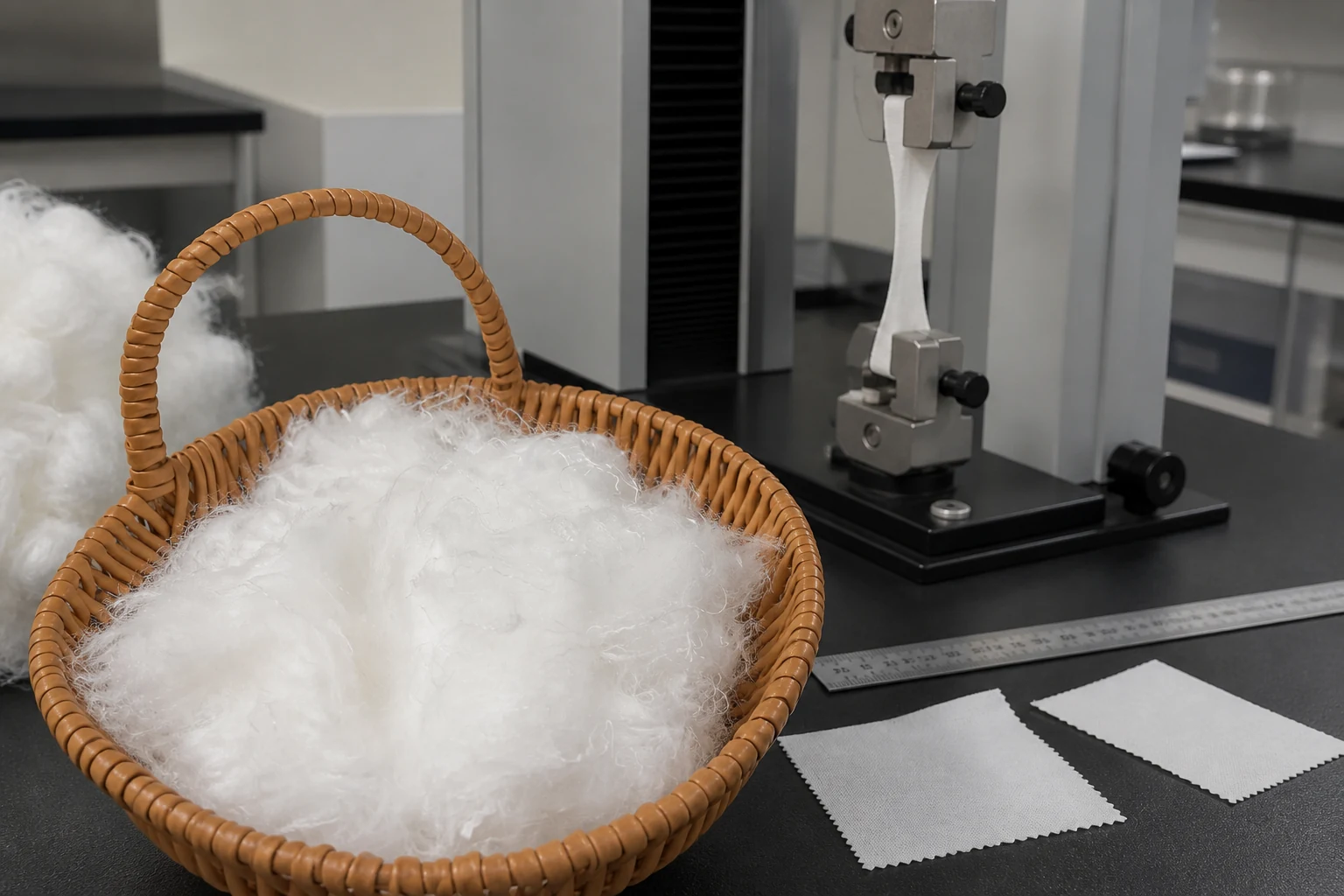
For a quick consumer check, gently pull the material in both main directions and see how completely it returns. For a purchase specification, use measured samples and an agreed method rather than hand feel alone.
What Stretch Means for Polyester Staple Fiber Buyers
If you buy polyester staple fiber, begin with the final product and process. Fiber parameters help control processing and material behavior, but they do not independently set the finished stretch percentage.
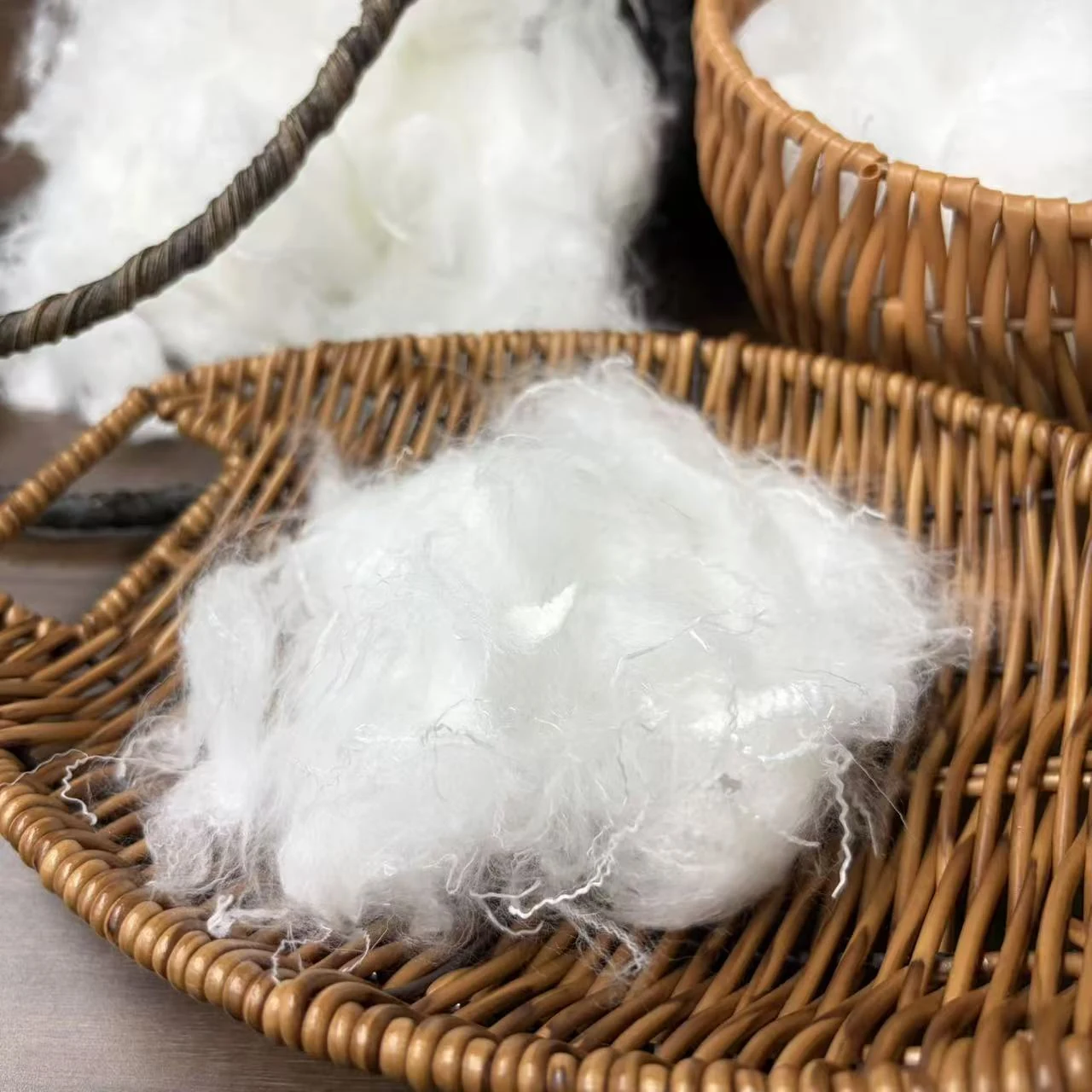
For spinning, confirm denier, cut length, crimp, tenacity, elongation, finish, and batch consistency alongside the target yarn and fabric construction. For nonwovens, add fiber orientation, web formation, bonding method, basis weight, and machine/cross-direction requirements. For filling, focus on loft, compression recovery, hand feel, hollowness, crimp, and filling performance rather than garment-stretch language.
Weihigh’s polyester staple fiber buying guide explains why the application should lead specification selection. Its 3D solid polyester staple fiber and hollow conjugated filling fiber pages also show that different PSF structures serve different processing and recovery needs.
When discussing a new material, share the end use, production route, desired movement, recovery limit, test direction, and test method. This places the fiber recommendation in the correct production and performance context.
Frequently Asked Questions About Polyester Stretch
Does Polyester Stretch More Than Cotton?
Not necessarily. A cotton knit can stretch more than a polyester woven because construction often matters more than the fiber name. Ordinary polyester may resist lasting deformation better in some comparable structures, but that does not make every polyester product elastic. Compare fabrics with similar construction and weight, then check extension and recovery in the direction that matters.
Is 95% Polyester and 5% Spandex Stretchy?
Usually, but the percentage alone cannot tell you how far it will stretch. The spandex supplies elastic extension and recovery, while the knit or weave controls how that capability appears in the finished fabric. Weight, yarn placement, finishing, and direction also matter. For a specification, state the required stretch range and recovery limit in the relevant direction.
Does Polyester Stretch After Washing?
Getting polyester wet or washing it does not create reliable engineered stretch. A garment may temporarily relax, shrink, distort, or grow because of heat, construction, finishing, or another fiber in the blend. Follow the care label and avoid high heat as a stretching method. For production decisions, compare extension and recovery after the intended laundering cycle.
Can You Permanently Stretch Polyester Clothing?
Do not expect a controlled or permanent size increase from pulling, soaking, or heating polyester clothing. You may distort a seam, finish, panel, or elastic component without producing even stretch. If a garment is too small, alteration or a different size is more reliable. If you are developing a product, build the required ease and stretch into the fabric specification before production.
Does Polyester Stretch Out or Lose Recovery Over Time?
Polyester does not automatically stretch out as you wear it, but a stretch fabric can lose recovery if its knit structure relaxes, elastic fiber degrades, or heat and repeated loading damage the material. Watch for bagging at knees, elbows, waistbands, or seat areas. For product development, compare recovery and wash durability on the finished fabric, not composition alone.
Does Recycled Polyester Stretch?
A 100% recycled polyester fabric can stretch, but recycled content alone does not tell you how much. As with virgin polyester, useful movement comes from the yarn, knit or weave, elastic-fiber content, direction, and finishing. A recycled-polyester knit may flex, while a stable woven may stay firm. Compare finished-fabric stretch and recovery data for the actual application.
Final Thoughts
Polyester is not simply stretchy or rigid; the useful answer comes from how the finished material moves and returns. Handle the material in the direction it will work, then judge recovery as carefully as extension. If your project starts with staple fiber, use our polyester staple fiber buying guide to translate the end use into a practical material brief.
Post time: Aug-21-2026