
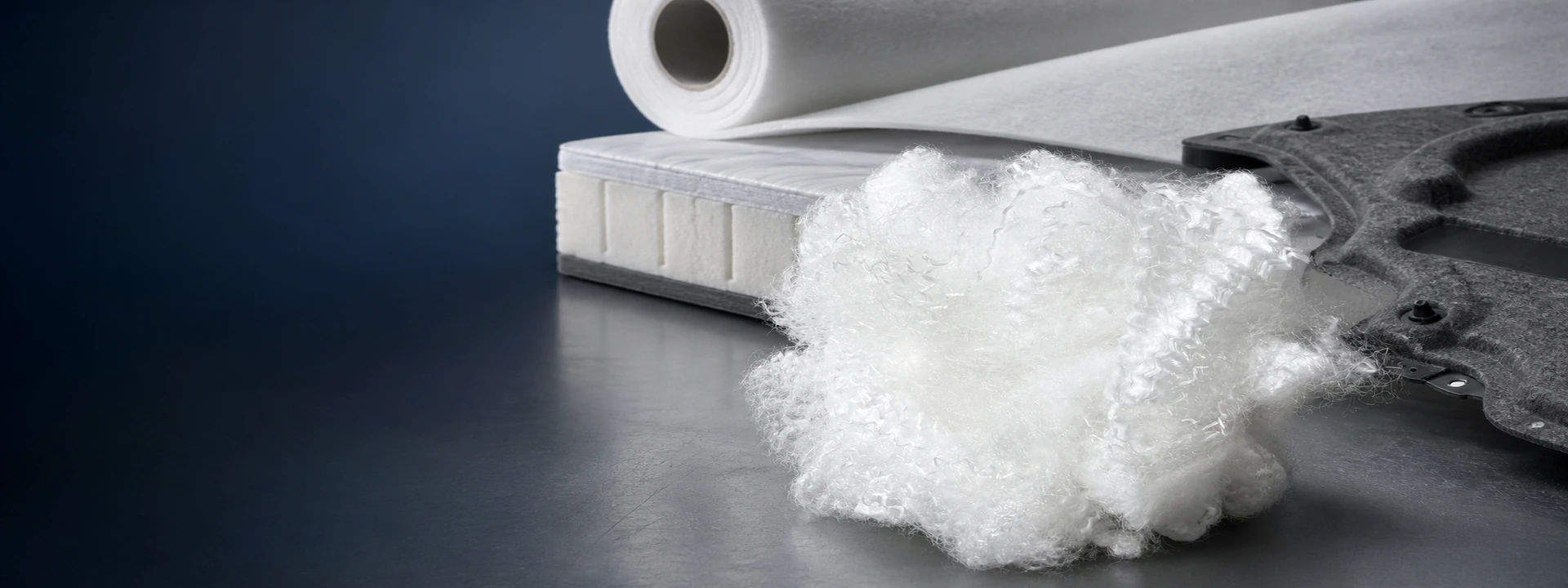
Cooperative Enterprise








Low Melt Fiber Support Based on Your Production Process
20+ Years of Experience
Practical polyester fiber production experience since 2001.
Three-Factory Support
Three factories support stable production and long-term supply.
Consistent Quality Control
Samples and bulk orders follow approved quality standards.
Process-Based Customization
Low melt fiber is matched to your equipment and bonding process.
If you would like to learn more about low-melting-point fibers and get the latest pricing, please contact us.
Low Melt Polyester Staple Fiber
Product Details
Start with the end product rather than choosing only by price or melting point. A soft mattress pad, a molded automotive panel and a filter web need different bonding results.
- Product Specifications
- Product Knowledge
| Property | Available Options | Why Buyers Should Check It |
|---|---|---|
| Fiber Type | PET/Co-PET bicomponent bonding fiber; custom structures available | The low-melting sheath forms bonds, while the PET core helps retain the fiber structure. |
| Polymer Structure | Sheath-core polyester structure; customizable by application | Polymer design affects melting behavior, bonding strength and heat stability. |
| Denier | Common options: 2D, 4D, 6D, 8D and 15D; other deniers can be customized | Fineness affects opening, carding, web structure and finished hand feel. |
| Cut Length | Common options: 38 mm, 51 mm and 64 mm; custom lengths available | The length must match the customer’s feeding, opening and carding equipment. |
| Melting Point | Common options: approximately 110°C, 130°C and 180°C; customized grades available | The melting point shows when the low-melting component begins to activate. |
| Bonding Conditions | Set according to the fiber grade, web weight and customer’s equipment | Actual bonding depends on material temperature, heating time, airflow, pressure and line speed. |
| Color | Raw white, optical white, black and customized colors | Color consistency is important for white, light-colored and visible finished materials. |
| Raw Material | Virgin and recycled options available | Raw material affects color, cleanliness, consistency and certification requirements. |
| Finish | Non-siliconized as a common option; finish can be adjusted for the processing line | Surface finish affects friction, static, opening, blending and carding. |
| Crimp | Controlled according to denier and application; customizable | Crimp affects fiber cohesion, blending, web formation and finished bulk. |
| Moisture | Controlled according to the agreed product specification | Stable moisture supports storage, opening and processing consistency. |
| Packing | Compressed export bales; bale weight, wrapping and shipping marks can be customized | Packing pressure and storage conditions can affect fiber opening after delivery. |
| MOQ | Flexible according to the grade, color and customization requirements | Standard and customized grades may have different minimum order quantities. |
| Documents | TDS, COA, packing list, commercial invoice and certificate of origin; other documents when applicable | Documents must match the supplied product, factory, batch and destination market. |
| Customization | Denier, cut length, melting point, color, finish and packing can be customized | Customized production helps match the customer’s equipment and finished-product requirements. |
What Is Low Melt Polyester Staple Fiber?
Low melt polyester staple fiber is used as a bonding fiber.
It is usually blended with regular polyester or another base fiber. When the web is heated, the lower-melting component softens. It joins nearby fibers at their contact points.
The material is then cooled. The bond points become stable and help the nonwoven keep its shape.
Many grades use a bicomponent structure. A common design has a lower-melting sheath and a more heat-stable core. The exact polymer structure must still be checked for the supplied grade.
What Low Melt Fiber Adds to a Nonwoven?
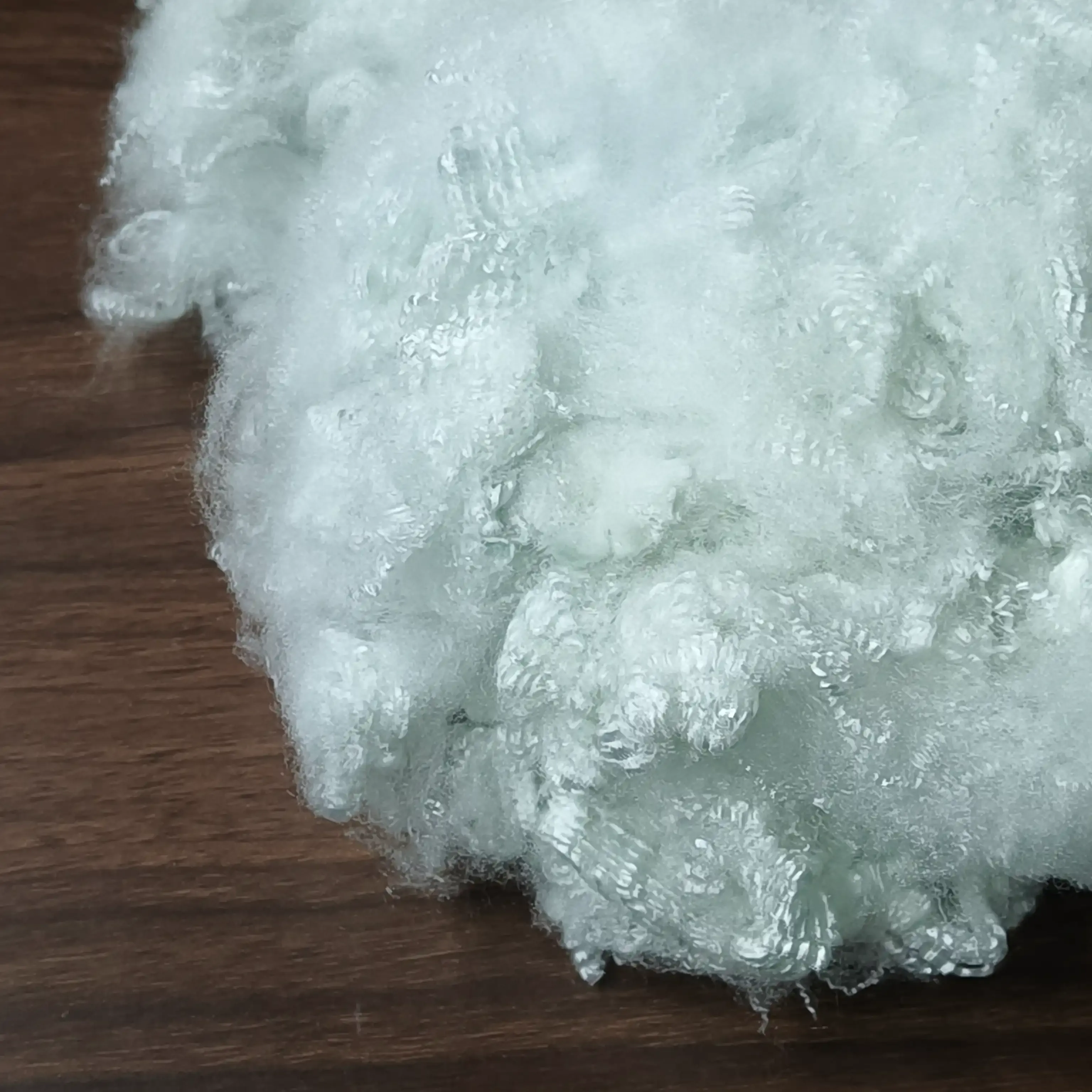
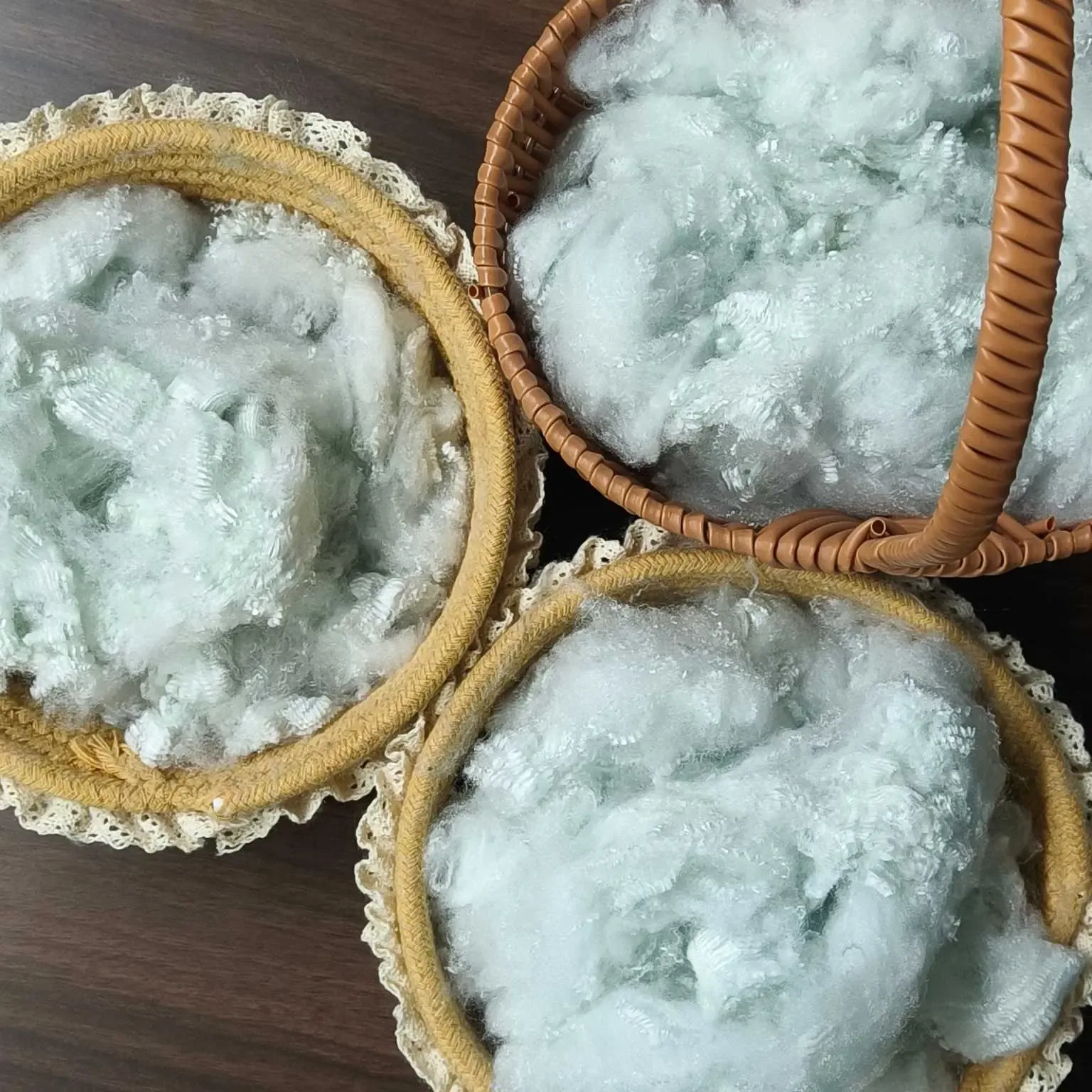
The bonding fiber is blended through the material. Heat creates bond points where the fibers meet.
Changing the blend ratio and heating conditions changes the finished strength and stiffness.
In suitable products, thermal bonding can reduce the need for liquid adhesive and a separate adhesive application step.
It may be blended with solid, hollow or recycled polyester. The actual combination must be tested on the customer’s line.
Heat and pressure can help a fiber web take the shape of a mold and hold that form after cooling.
Stable length, fineness, crimp and thermal behavior make carding and bonding easier to control from batch to batch.
Low Melt Fiber Applications and Thermal Bonding Uses
-
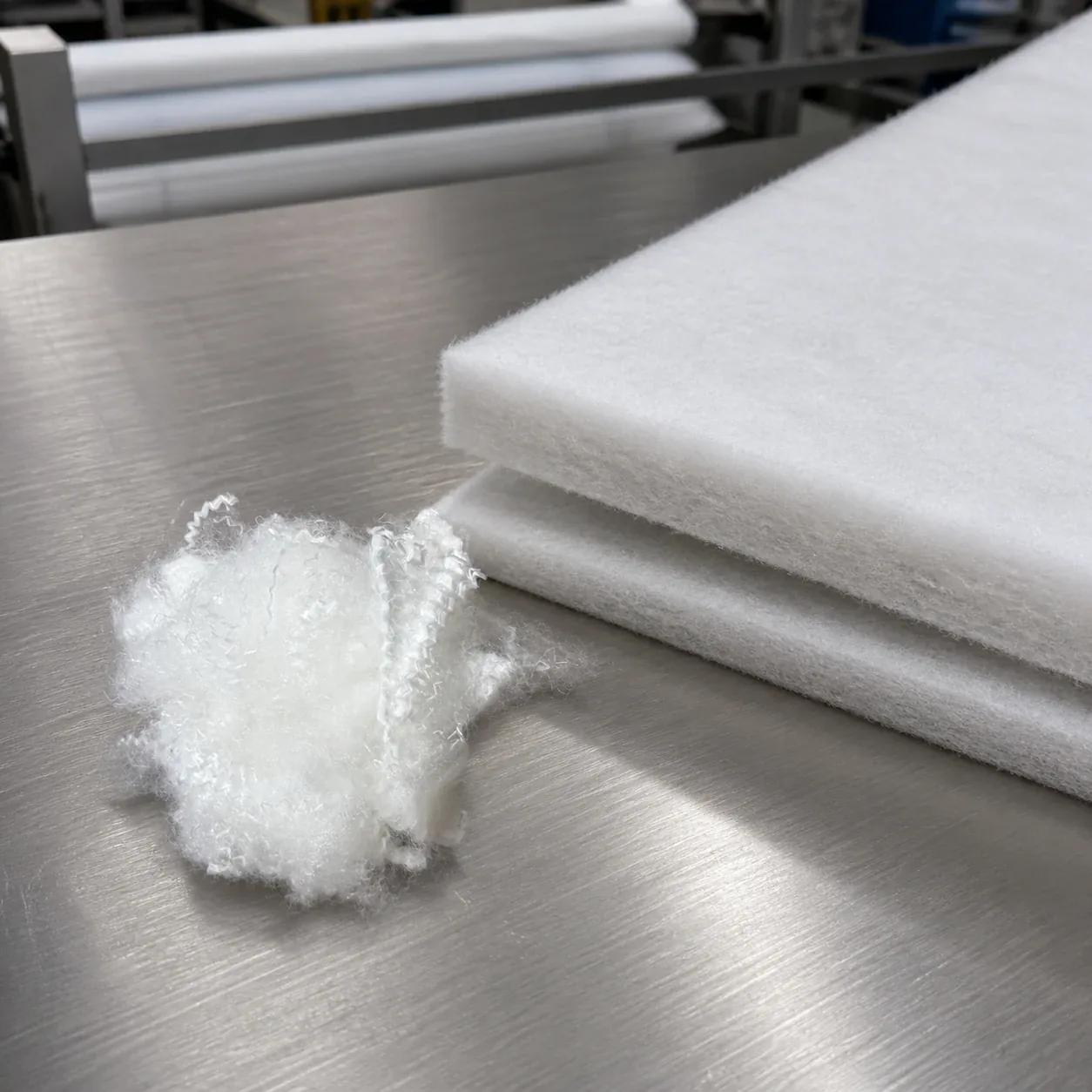
thermal-bonded-furniture-padding
Furniture and Mattress Padding
Buyer concern: The padding may separate, become uneven or lose its shape during cutting and assembly.
Weihigh low melt fiber helps bond the polyester web into a stable padding layer. The denier, cut length and bonding performance can be adjusted to suit the customer’s carding and heating process.
send an immediate inquiry -
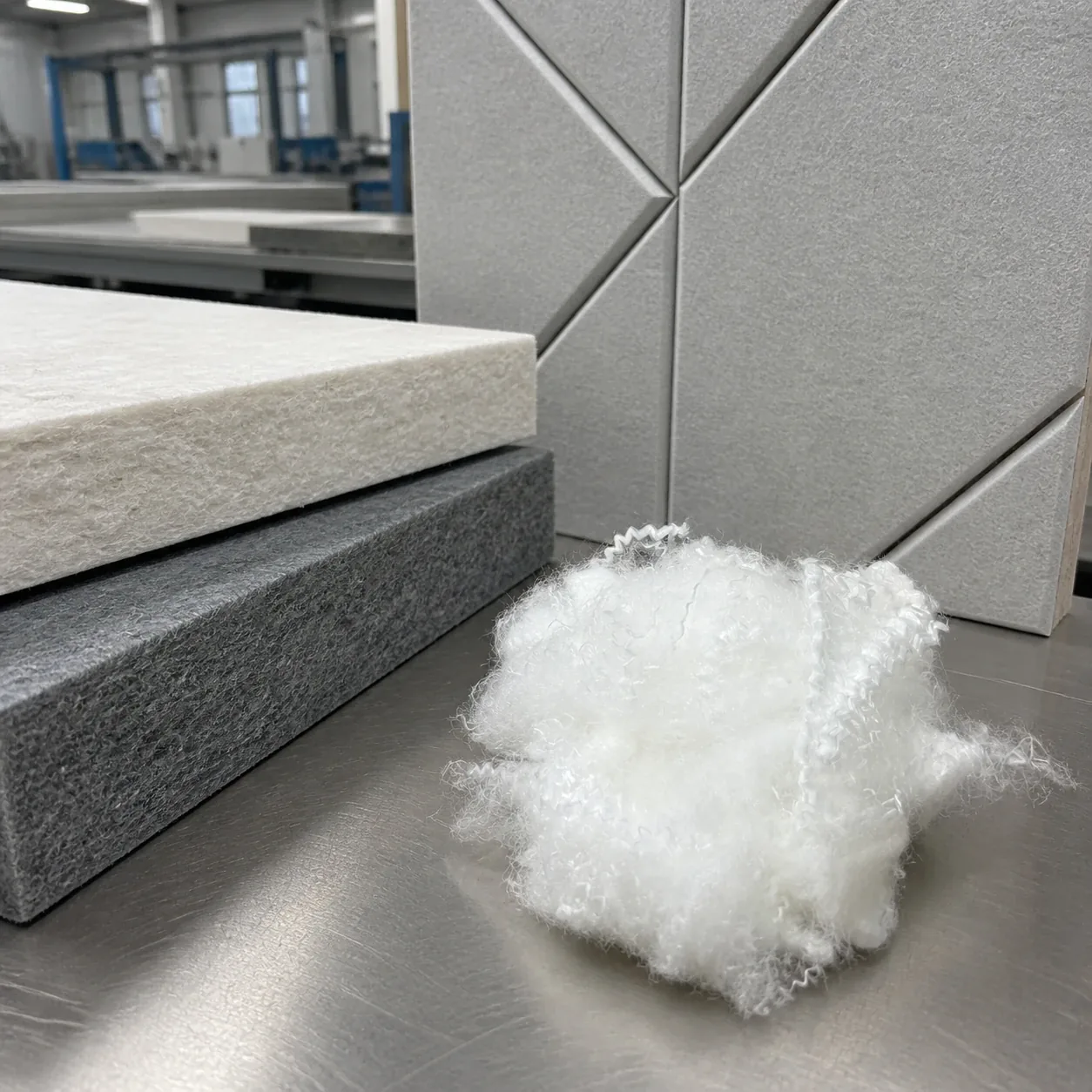
polyester-acoustic-building-panels
Acoustic and Building Panels
Buyer concern: Poorly bonded panels may have uneven density, weak edges or unstable thickness.
The fiber blend must open evenly before heating. A suitable bonding ratio helps the panel keep its shape without making it excessively hard. Weihigh can adjust the fiber specification according to the required panel density and hand feel.
send an immediate inquiry -
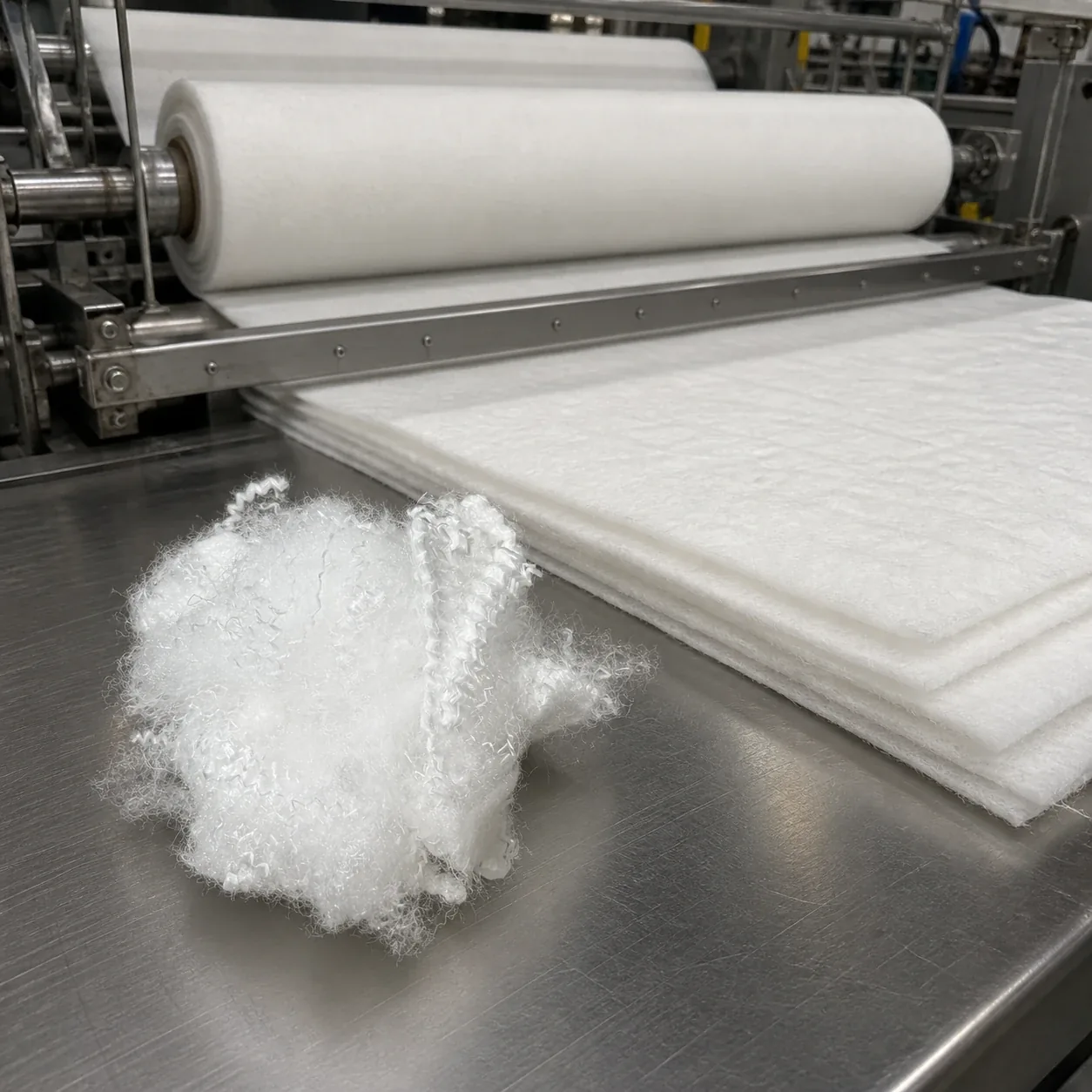
low-melt-polyester-bonded-wadding
Polyester Wadding and Batting
Buyer concern: The fiber web may delaminate, shrink unevenly or become too stiff after heating.
The bonding temperature and low melt fiber ratio must match the required weight and softness. Weihigh can provide trial samples before bulk production so customers can check opening, bonding and finished hand feel.
send an immediate inquiry -
automotive-interior-fiber-bonding
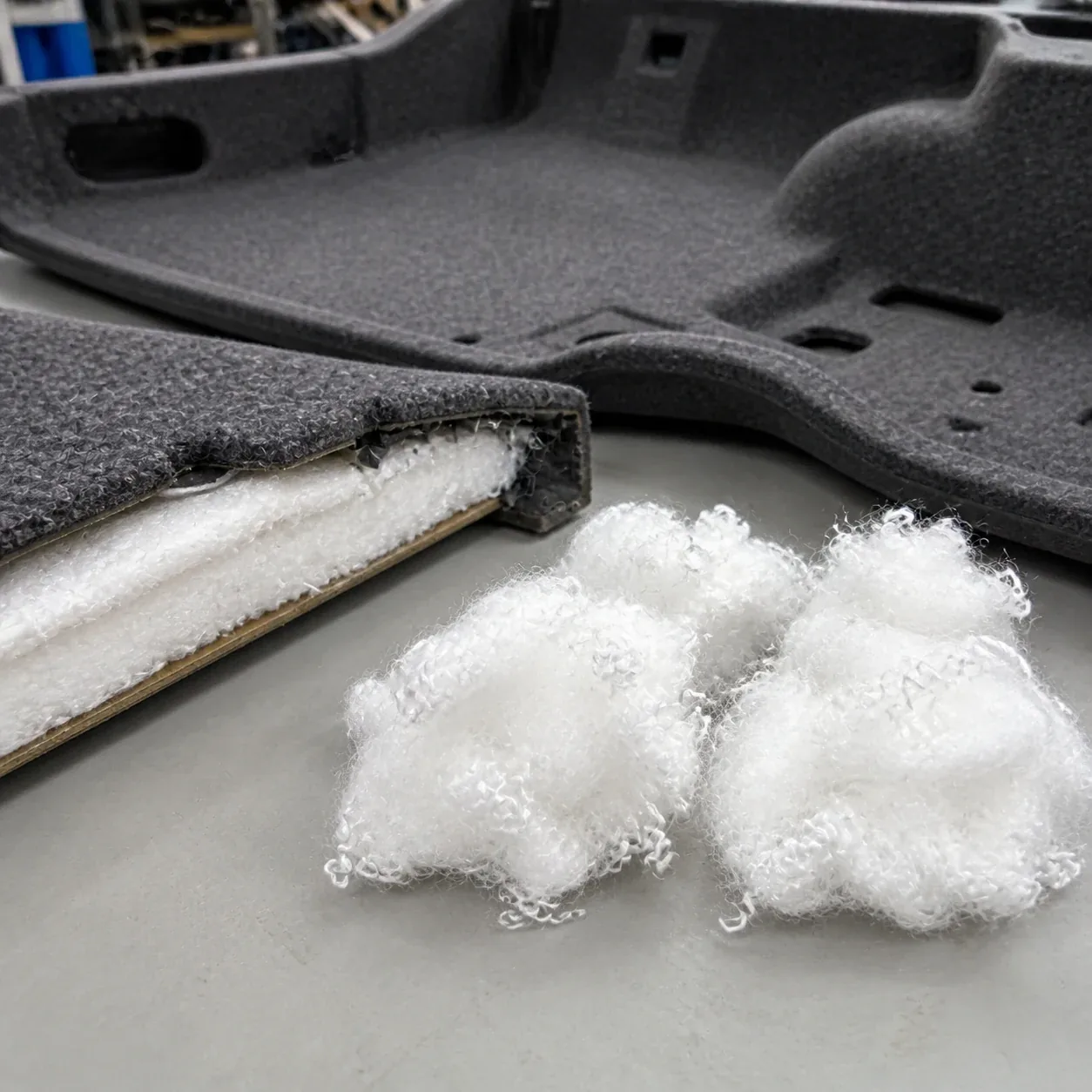
Automotive Interior Materials
Buyer concern: Automotive parts require stable dimensions, clean molding and consistent performance between batches.
Low melt fiber helps the blended web hold its shape during hot pressing and molding. Fiber fineness, cut length and bonding behavior can be matched to automotive sound-absorbing panels, interior liners and molded components.
send an immediate inquiry -
thermally-bonded-filter-media
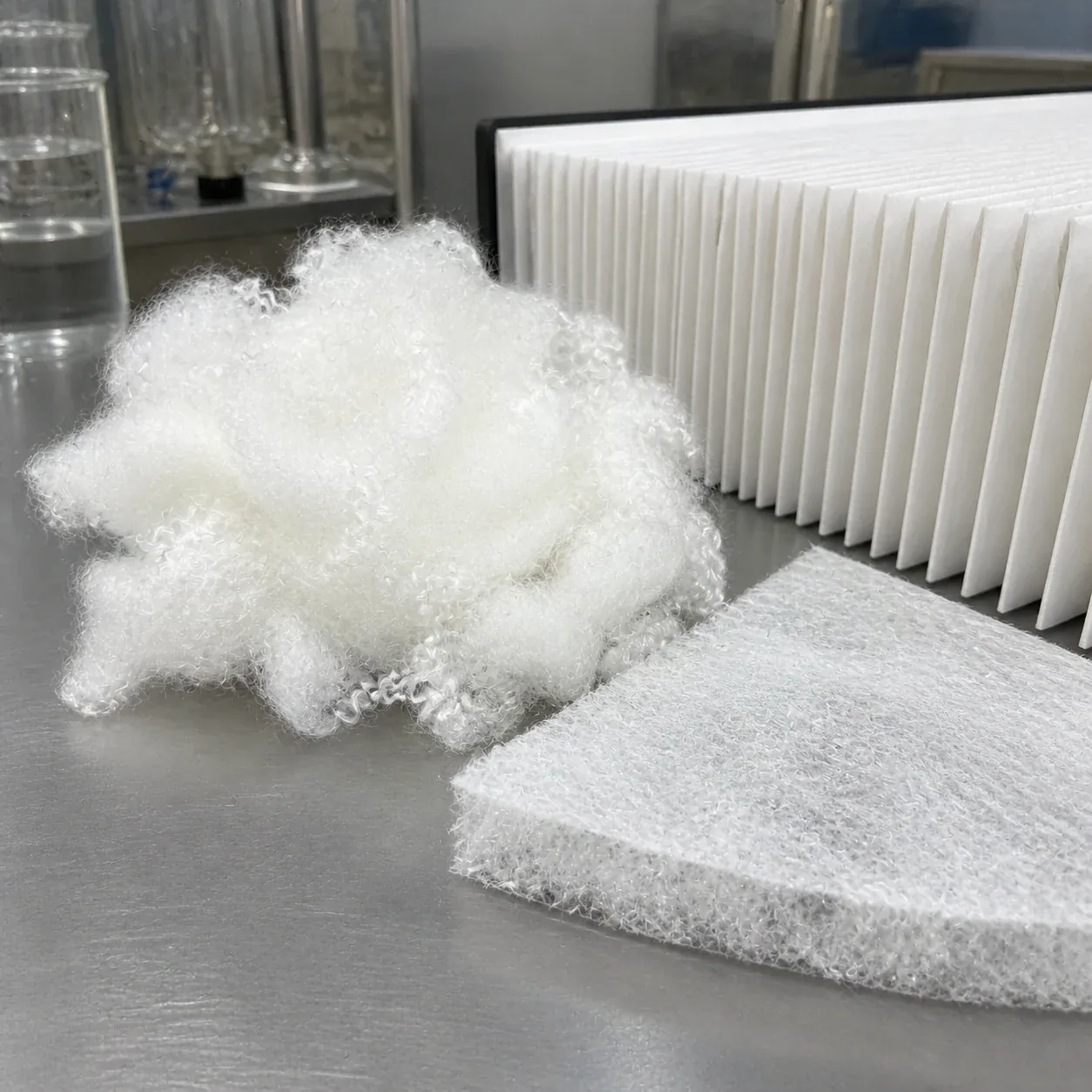
Filter Media
Buyer concern: Excessive bonding can block the fiber structure, while weak bonding can cause shedding and unstable filtration.
The bonding fiber must be distributed evenly through the web. Weihigh can adjust fineness, cut length and surface finish to support the required web formation and processing conditions.
send an immediate inquiry -
hard-cotton-bonded-batting
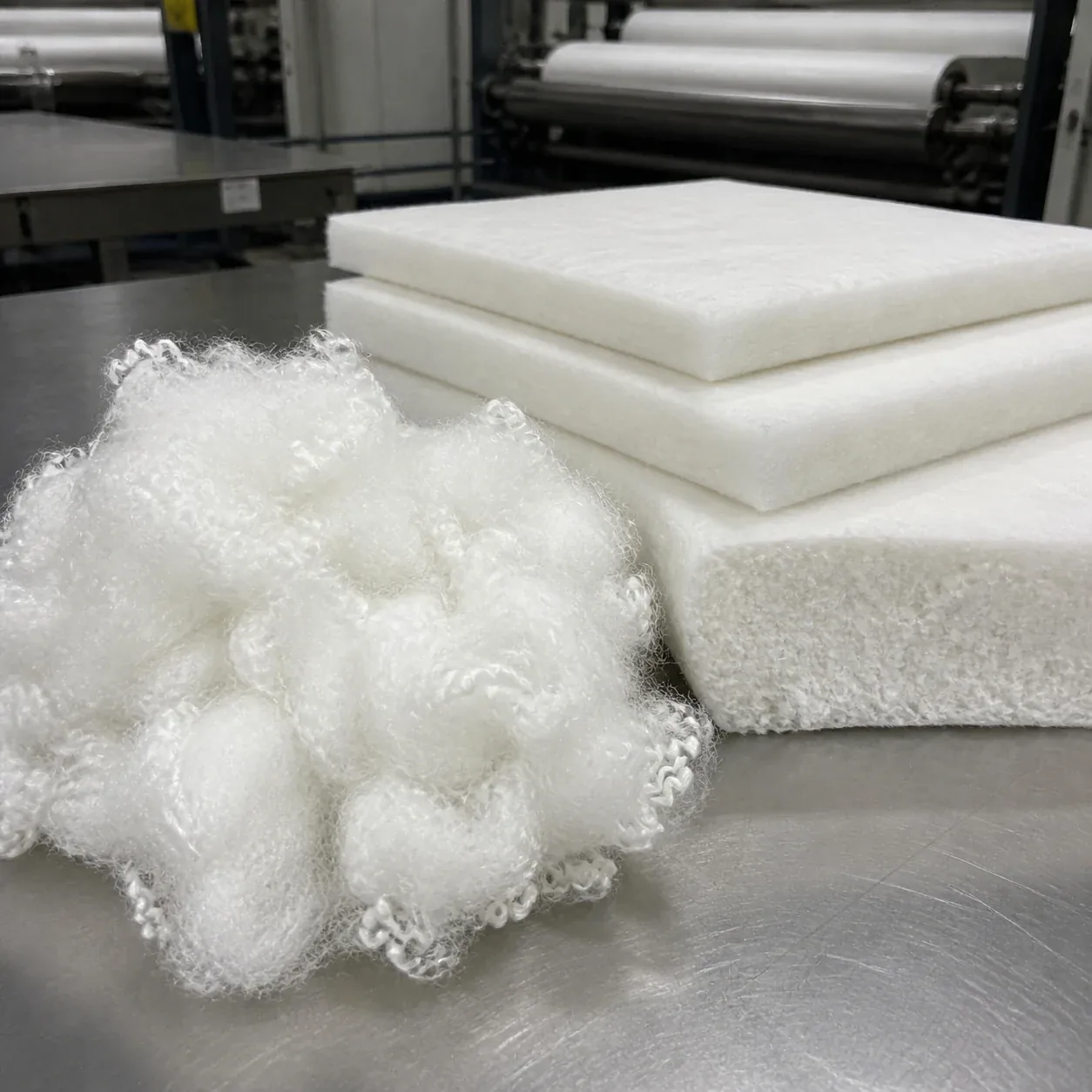
Hard Cotton Batting
Buyer concern: Hard cotton may have loose layers, inconsistent firmness or poor shape retention.
Low melt fiber forms bonding points between the base fibers during heating. The blend ratio can be adjusted to produce soft, medium-firm or firm batting for different end uses.
send an immediate inquiry -
heat-molded-polyester-fiber-parts
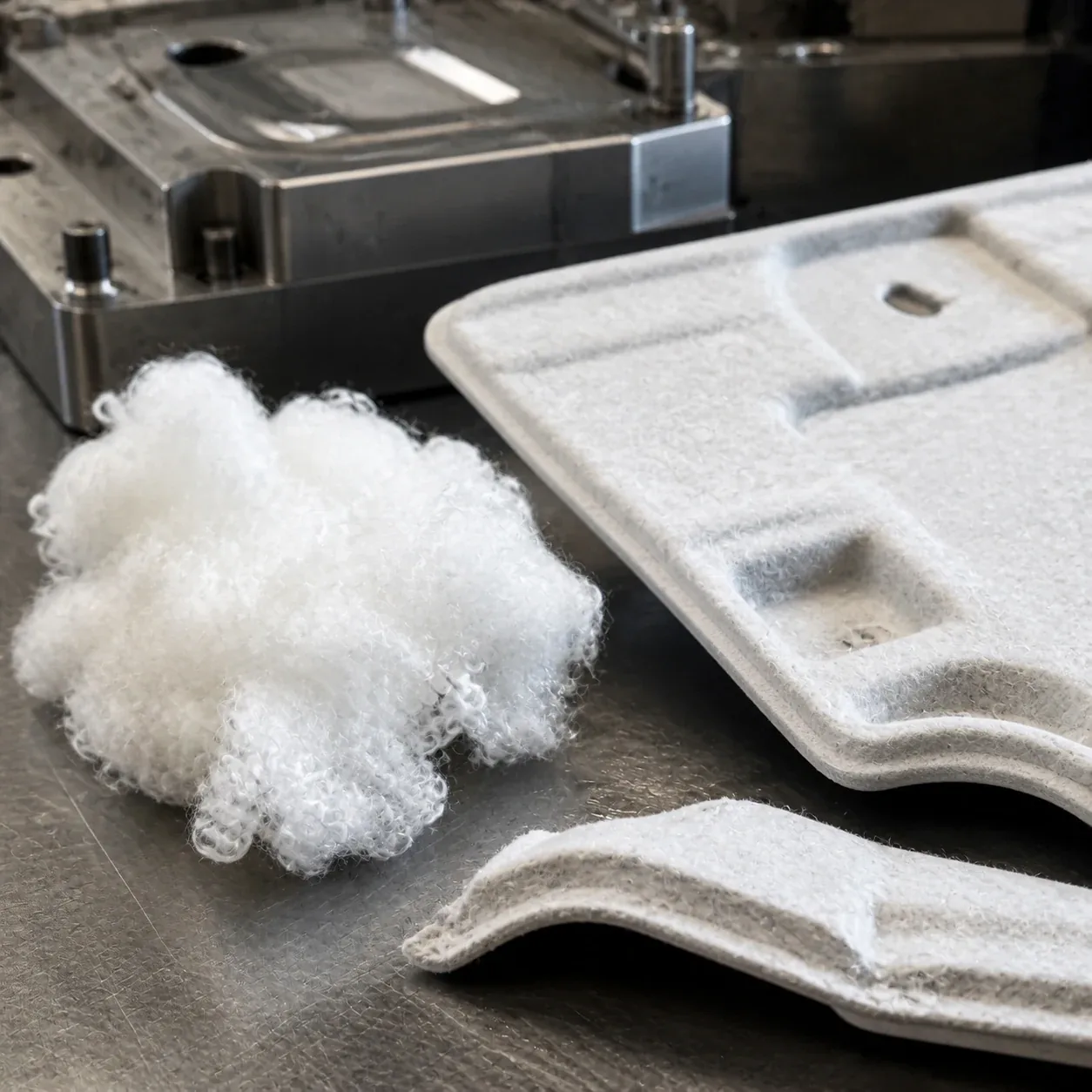
Heat-Molded Polyester Components
Buyer concern: Molded parts may deform, develop weak edges or show uneven density.
Stable bonding behavior is important during hot pressing. Weihigh can adjust the fiber specification to suit the customer’s molding temperature, pressure and required component firmness.
send an immediate inquiry -
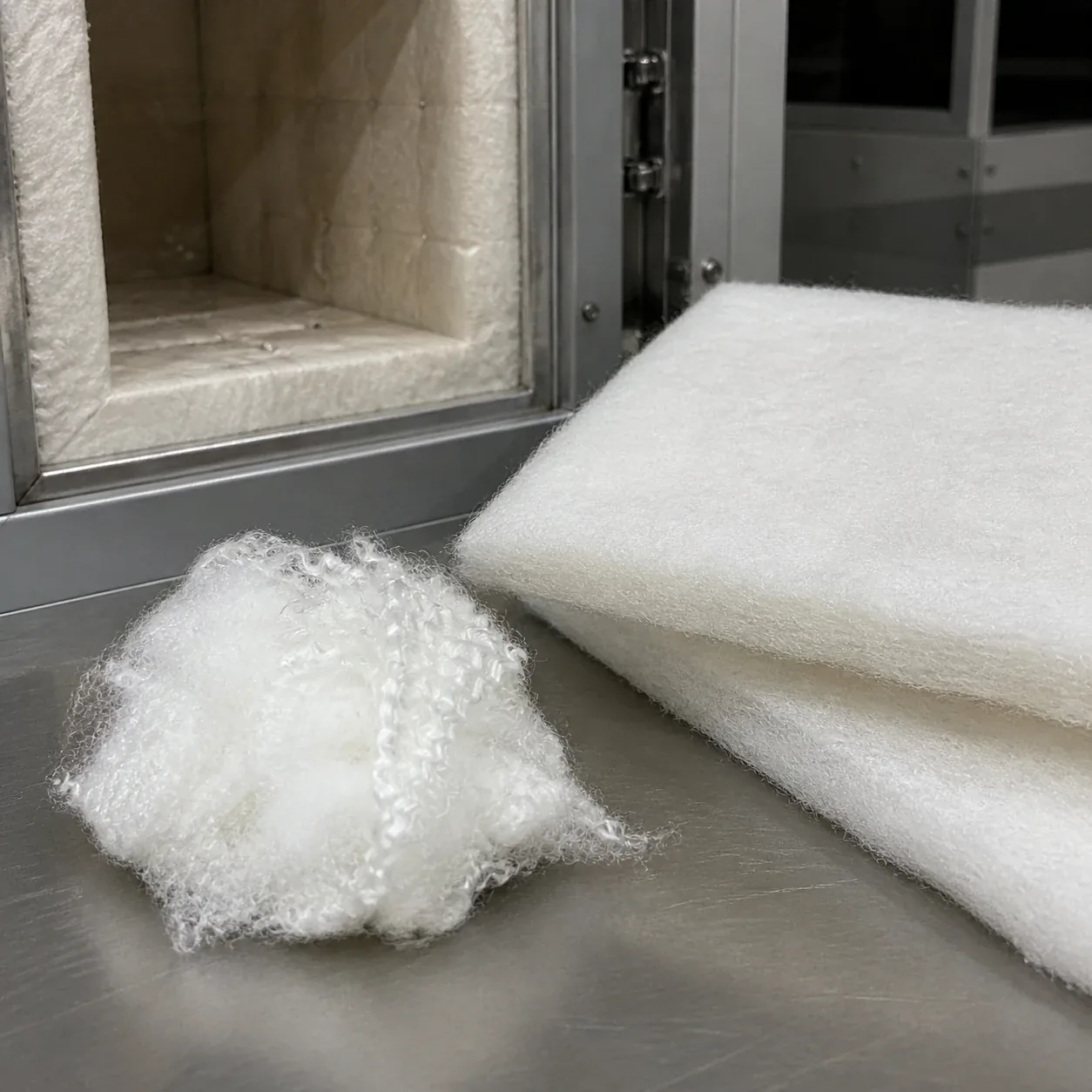
thermal-bonded-insulation-mat
Thermal Insulation
Insulation mats need to maintain an even thickness during cutting, packing and installation. Weak bonding can cause loose edges or local collapse. Too much bonding may make the material unnecessarily hard.
Low melt fiber creates bonding points between the base fibers after heating. Weihigh can adjust the fiber specification to match the required density, thickness and processing temperature.
send an immediate inquiry -
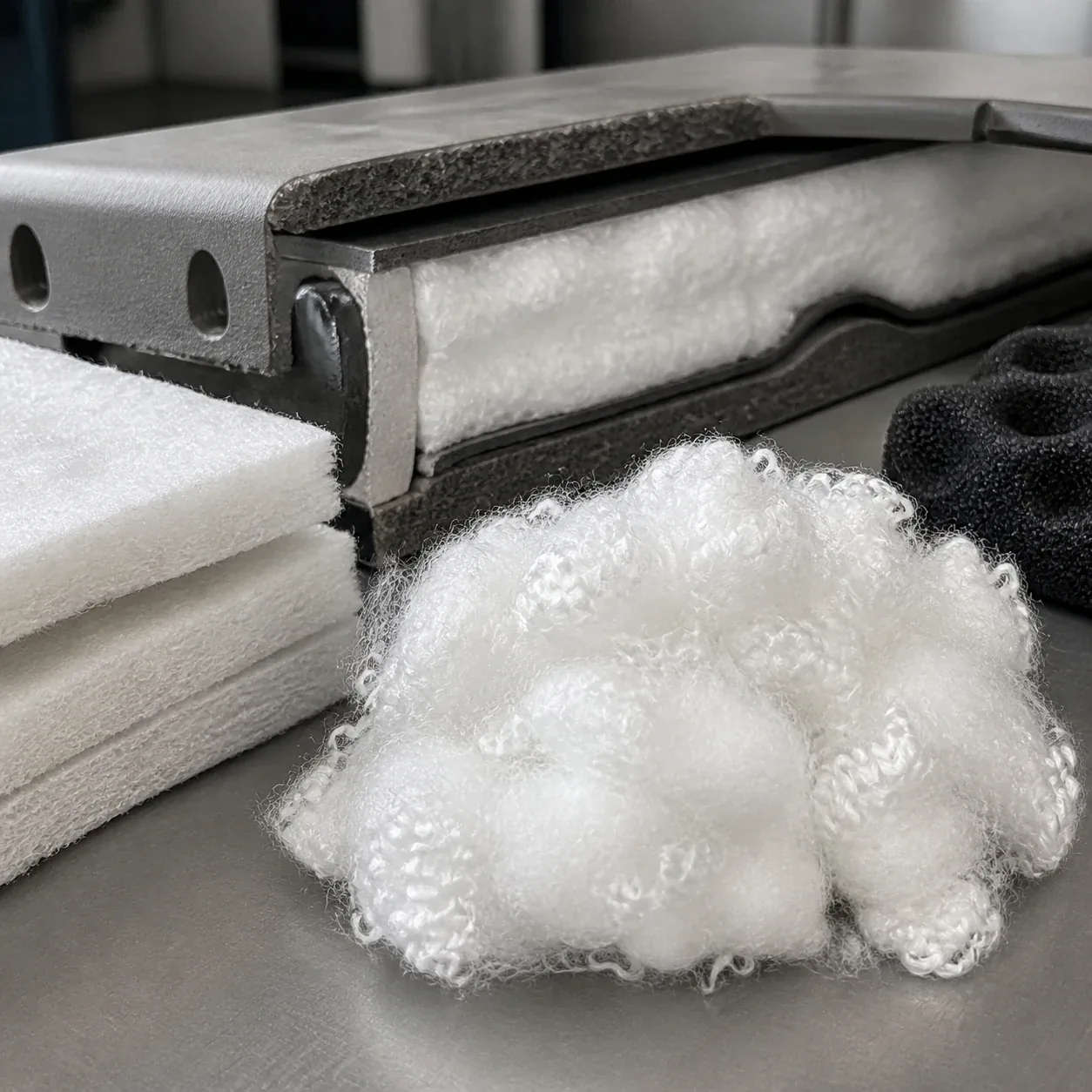
polyester-acoustic-insulation-panel
Acoustic Insulation
Acoustic materials need an open fiber structure to help absorb sound. Excessive bonding can make the web too dense. Insufficient bonding can cause loose layers and difficult cutting.
A suitable low melt fiber ratio stabilizes the material without closing its fibrous structure. Weihigh can customize the specification for acoustic panels, sound-absorbing pads and noise-control materials.
send an immediate inquiry -
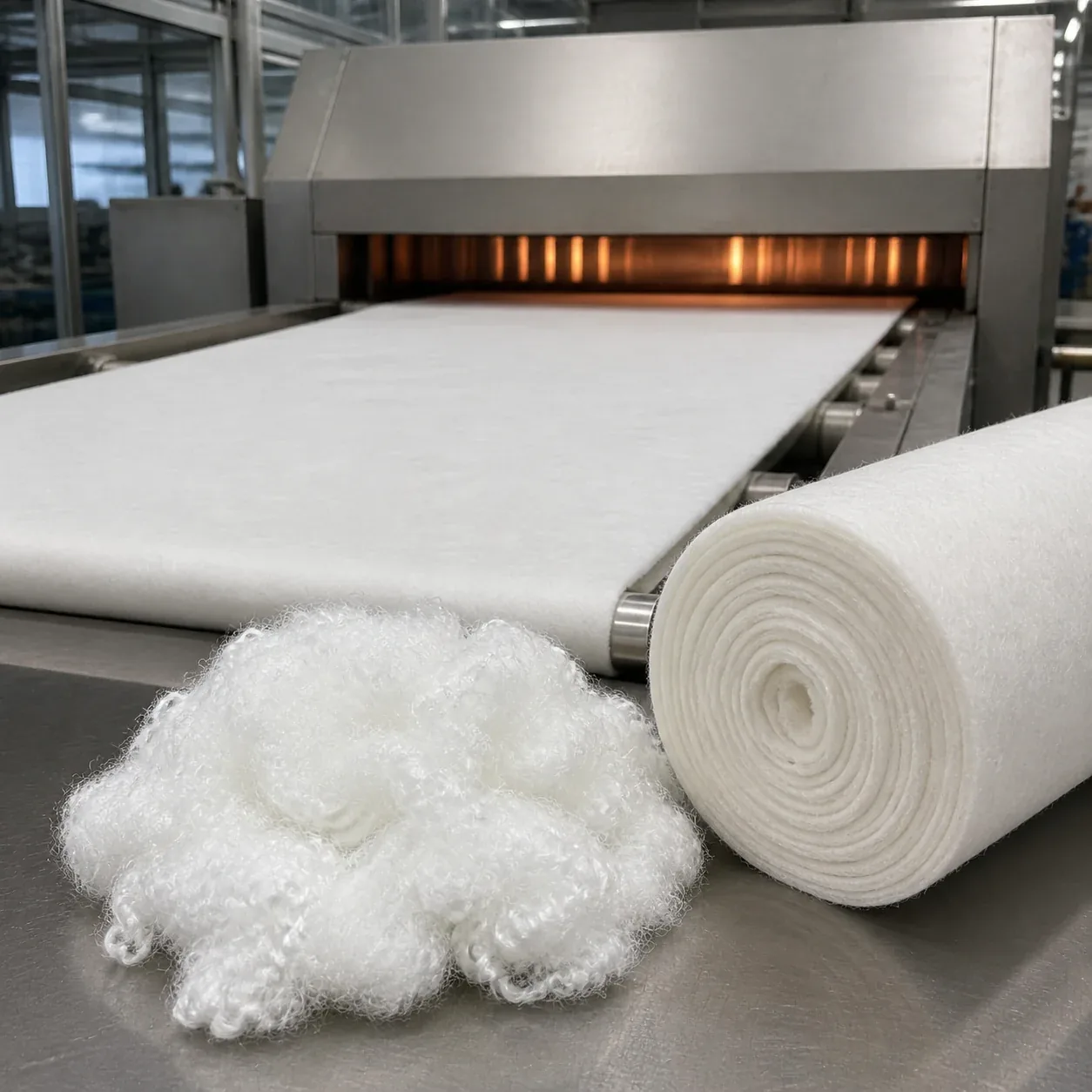
thermal-bond-nonwoven-production
Thermal-Bonded Nonwovens
Thermal-bond production requires the fiber to open evenly and activate within the correct temperature range. Poor matching may cause weak areas, hard spots or an uneven surface.
Weihigh can match the fiber fineness, cut length and bonding performance to the customer’s base fiber, web weight, oven temperature and line speed. Trial samples can be tested before bulk production.
send an immediate inquiry
Why Choose Weihigh as Your Low Melt Polyester Staple Fiber Manufacturer?
We understand that a fiber can look acceptable on paper and still perform poorly on the customer’s line.
That is why we ask about the full process. For low melt fiber, the result is shaped by blending, carding, web formation, heating and cooling. Looking only at denier and cut length leaves out too much.
Three-Factory Support
Weihigh operates through three factories. The actual production site, available grade and supporting documents are confirmed for each order.
Knowledge of Downstream Processing
Our internal experience covers opening, blending, carding, nonwoven web formation and thermal bonding. This helps us understand where defects may appear later in production.
Sample Approval
We recommend testing the fiber on the customer’s actual line. Keep the approved fiber and finished-material samples as the references for bulk supply.
Batch Control
Length, fineness, crimp, finish and thermal behavior can all change the bonding result. Important tolerances should be agreed before production.
Factory-Level Environmental Management
Our factories carry out energy, water and emissions management activities.
Available records include annual energy monitoring, water-saving measures, process-water reuse, wastewater treatment and factory-level emissions data.
Environmental figures are disclosed by factory and reporting year. Group totals are only used after the accounting boundaries have been checked.
Who Is Weihigh?
Weihigh is a polyester staple fiber supplier supported by three factories.
Our product experience covers spinning fiber, recycled solid fiber, hollow filling fiber, functional polyester fiber and fibers used in nonwoven production.
We work with customers from different markets. Their concerns vary, but batch consistency, defects, color and processing stability appear again and again.
For low melt fiber, we also pay attention to how the fiber behaves during blending, carding and heating. The product specification, production site and documents are confirmed for each order.
Frequently Asked Questions About Low Melt Polyester Staple Fiber
-
1What is low melt polyester staple fiber?
Low melt polyester staple fiber is used as a thermal bonding fiber. Its lower-melting component softens during heating and joins nearby fibers.
-
2Is low melt fiber always a sheath-core fiber?
Many low melt grades use a sheath-core structure, but not every product is the same. Confirm the polymer structure and technical data for the supplied grade.
-
3What is the bonding temperature?
There is no single bonding temperature for every low melt fiber. The correct range depends on the grade, web weight, equipment, heating time, airflow, pressure and line speed.
-
4Is the oven setting the same as the fiber temperature?
Not always. The air or equipment setting may be higher than the temperature reached inside the web. Thick materials and fast line speeds need extra attention.
-
5How much low melt fiber should be added?
The blend ratio depends on the required strength, softness and web structure. More low melt fiber can increase bonding, but it may also make the finished material harder.
-
6Why is my bonded nonwoven too hard?
The blend may contain too much bonding fiber. Excessive temperature, heating time, pressure or web density can also increase stiffness.
-
7Why is the bonding strength too low?
Possible causes include insufficient heat, short heating time, poor blending, low fiber contact or uneven web formation. Check the full process before changing the fiber.
-
8Why does the fiber stick to the machine?
The low-melting component may be softening before the intended bonding stage. Check hot surfaces, local overheating, storage conditions and machine cleaning.