Conductive Fiber: Making Materials “Live” and Products Safer
If you’ve ever worked with electronics, functional apparel, or industrial protective materials, you’ve definitely heard of static electricity. Invisible, untouchable, yet capable of frying chips, attracting dust, and even causing safety accidents. Enter Conductive Fiber—the unsung hero quietly “draining” the risk behind the scenes.
I’ve been in B2B export materials for years, working with European electronics factories, North American protective clothing brands, and Southeast Asian cleanroom projects. The question I hear most from clients is: “Your conductive fiber—does it actually conduct, or is this just marketing fluff?” Let’s clear that up today.
What is Conductive Fiber?
How Conductive Fiber Works
In simple terms, conductive fiber achieves electrical conductivity by:
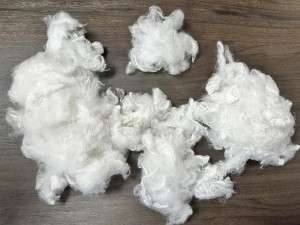
Adding conductive materials (like carbon-based substances or metal particles) to the fiber.
Using composite spinning techniques to form conductive pathways.
Blending with natural or synthetic fibers to balance functionality and comfort.
According to the International Electrotechnical Commission (IEC) standards for antistatic materials, a surface resistivity of 10⁵–10¹¹ Ω effectively controls static. In practice, we often customize products for clients in the 10⁶–10⁹ Ω range, meeting electronic manufacturing or protective clothing standards.
Why More Industries Are Choosing Conductive Fiber
First, electronic products are getting increasingly sophisticated. According to industry statistics, ESD (Electrostatic Discharge) causes billions of dollars in annual losses. Second, safety regulations are stricter than ever, especially in EU and North American markets.
Common Applications
ESD-protective workwear for electronics factories
Cleanroom floors or wall materials
Anti-static carpets and felt materials
EMI-shielding composites
Industrial filtration systems
We once supplied conductive blended felt to a German electronics assembly company. After switching to our conductive fiber, their ESD-related scrap rate dropped by about 28%. Not marketing fluff—this is what the client calculated themselves.
Our Materials: Not Just “Usable,” But “High-Quality”
Conductivity is important, but the base materials determine long-term stability.
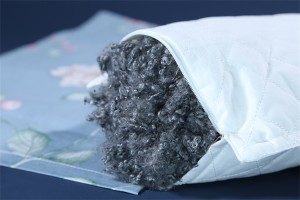
Virgin Wool and High-Quality Polyester
We use:
Virgin Wool: Natural moisture absorption helps stabilize resistivity.
High-quality Polyester from major suppliers: High fiber strength and dimensional stability.
Customizable conductive component ratios: Adjusted for client-specific applications.
Some clients worry: “Will conductive materials compromise handfeel or strength?” Indeed, if the ratio is off, the material can feel brittle or stiff. That’s why we balance conductivity and base fiber strength instead of blindly chasing the lowest resistance.
Product Specifications (Customizable Wholesale)
|
Item |
Parameter Range |
Notes |
| Surface Resistivity | 10⁶–10⁹ Ω | Customizable |
| Raw Materials | Virgin Wool / High-Quality Polyester | Blending supported |
| Basis Weight | 80–800 gsm | Customizable |
| Thickness | 0.8–10 mm | Processable |
| Conductive Components | Carbon-based or metal composites | Application-dependent |
| Supply Form | Loose fiber / Felt sheet / Custom加工 | B2B wholesale |
Multiple Perspectives: Advantages and Limitations
Advantages
Stable and long-lasting conductivity
Scalable production
Compatible with conventional textile processes
OEM/ODM support
Possible Limitations
High conductivity levels increase costs
Some metal components add weight
Resistance may vary under different humidity conditions
Some clients assume, “The stronger the conductivity, the better.” Not always. Too low resistance may not meet certain anti-static clothing standards. We first understand the final application, then recommend the appropriate conductivity level.
Our Experience and Industry Insight
As a long-term supplier serving overseas clients, we focus on three key questions:
Does it comply with local regulations?
Can we provide stable supply?
Does it offer long-term cost efficiency?
We once supported a North American protective clothing project from sampling to production through three rounds of testing. The client ultimately chose the 10⁷ Ω level, balancing conductivity, wash durability, and cost.
We don’t aim to be the “cheapest” supplier. We aim to be the “long-term partner” supplier.
Frequently Asked Questions (FAQ)
Q1: Will conductive fiber lose its effectiveness over time?
With composite spinning, conductivity usually remains long-term. Extreme environments still warrant periodic testing.
Q2: Do you support small batch trials?
Yes. We understand B2B clients need testing cycles and offer custom sample production.
Q3: Can it combine with other functional fibers?
Absolutely. We have achieved blends with flame-retardant, antibacterial, and other functional fibers.
Q4: Can it completely replace metal wires?
Depends on the application. For lightweight clothing and flexible materials, conductive fibers often have advantages. For high-current applications, metal components may still be necessary.
Conclusions regarding conductive fibers
Conductive fiber isn’t a gimmick—it’s a foundational component in modern industry. It helps electronics factories reduce losses, improves product safety, and enhances reliability for end users.
If you’re looking for stable, customizable, long-term conductive fiber suppliers, we can start with samples. After all, in the B2B market, trust isn’t told—it’s tested.