
Hollow Conjugated Recycled Polyester Staple Stuffing/Filling Fiber

Brief
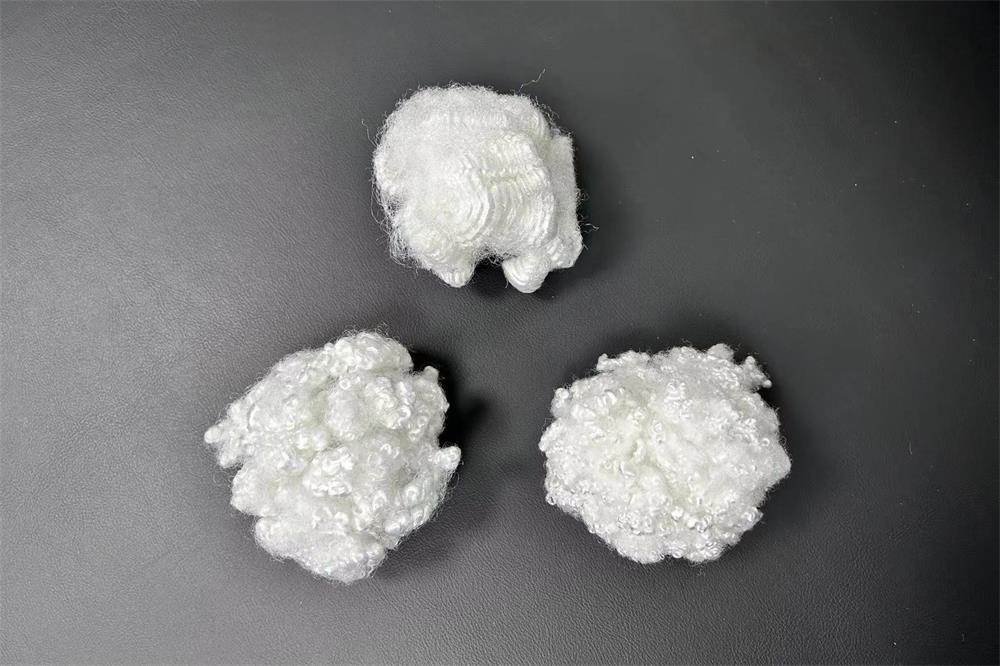
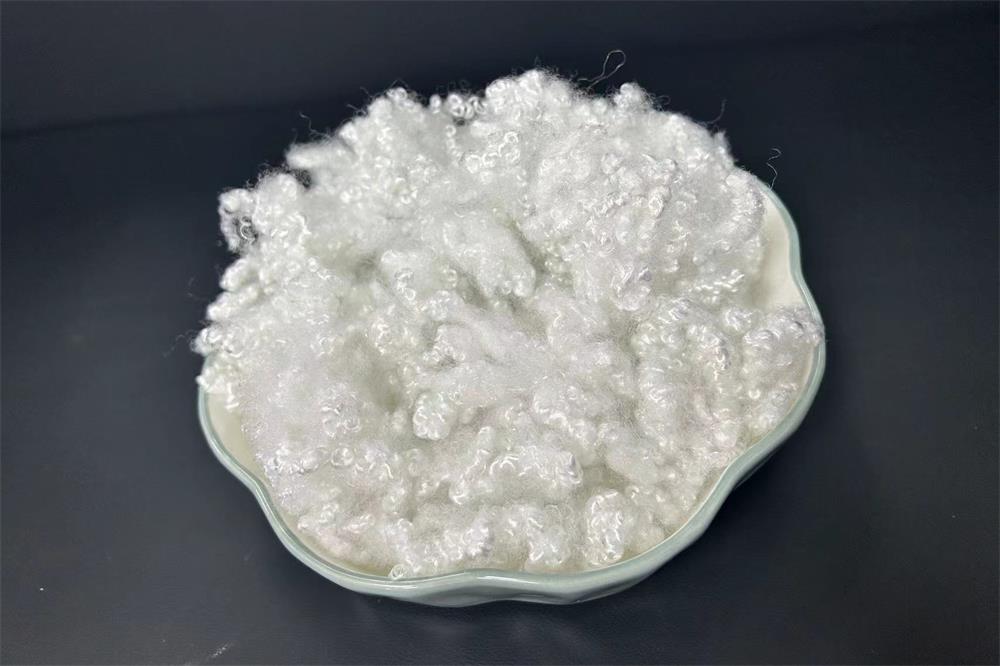
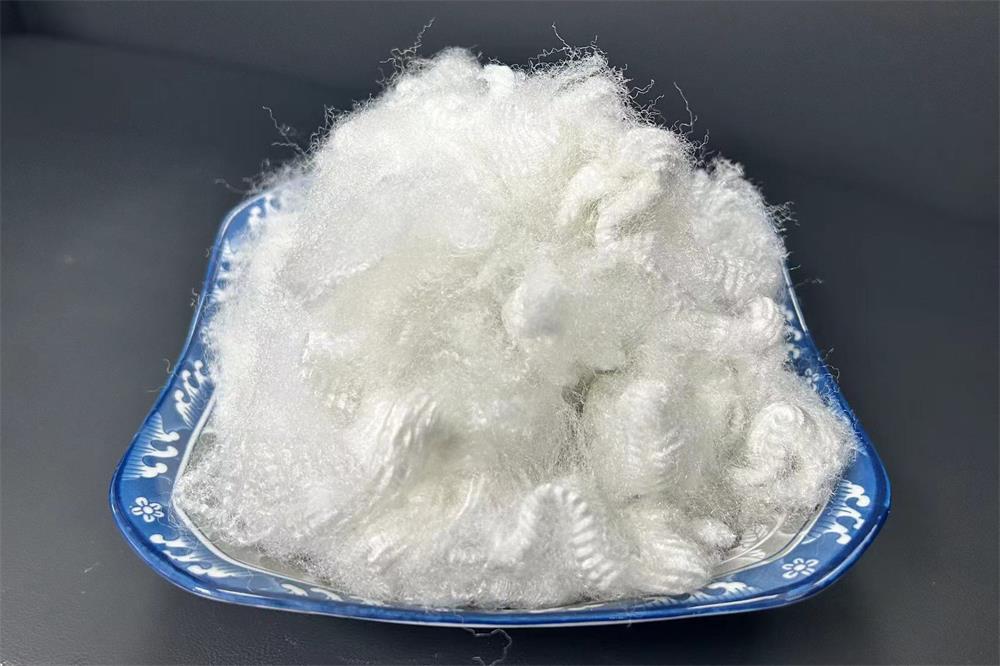
Wei High Hollow Conjugated Recycled Polyester Staple Stuffing/Filling Fiber is Recycled Polyester Staple Fiber, made from 100% consumed PET/Polyester Bottles by own fully production line from bottles to fibers. For Stuffing/Filling Fiber Material.
Recycling of PET/Polyester waste and used PET bottles is essential to maintain cleanliness of environment.
Specs
Materials: 100% Recycled Polyester
Fiber Type: Staple
Pattern: Siliconized and Non-siliconized
Style: Hollow Conjugated
Linear Density:3D-25D
Fiber Length: 32MM/38MM/51MM/64MM
Color: Raw White and Optical White
Grade: Recycled
Features
High intension,
Stable stretch elongation,
Highly elastic and puffed,
High ratio of hollowness
Excellent fluffy performance,
Pleasing, plump and gentle hand feeling,
Excellent Luster
Shipment Terms:
Packing: Packed in 220- 300kgs with compressed woven bales
Loading Weight: 22-24 tons/ 40HQ
Loading Quantity: 38-40 bales for a 20GP,
88-90bales of HCS or 92-94bales of HC for a 40HQ
Delivery time: 3-10 days after receipt of deposit.
Product Description
Recycled Polyester Staple Fiber is made from 100% post-consumer PET/Polyester bottles. As an eco-friendly product has emerged as the fastest-growing fiber amongst all types of manufactured fibers.
PET/Polyester bottles are not practically bio-degradable and difficult to dispose. New technology developed in recycling these post consumed PET/Polyester bottles to make fibers like Recycled Polyester Staple Fiber. These fibers are used to make non-woven carpet for auto-mobiles, making quilts, yarns, pillows etc.
Making Recycled Polyester Staple Fiber by consumed PET bottles not needs petrochemical raw materials, able to save natural resources, power and water saving, reduced CO2 emission and reduces the trouble on the environment.
1)Linear Density: 3D, 6D, 7D, 10D, 15D
2)Fiber length: 32mm, 51mm, 64mm, 76mm,
3)Pattern: Siliconized or Non-siliconized
4)Tensile strength: 3.5 to 4.5 gm/Denier
5)Elongation: 40 to 60%
6)Oil Pickup: 0.20% to 0.35% min
7)Crimps: 3 to 5 per cm
8)Shades: All shades available
9)Color Fastness: 4+
Usage: Cushions, Pillows, Quilts, Toys, Jacket, Mattress, Sofa, Bedding, Poly fill wadding.
10)Annual Output: More than 200,000 tons
Hollow Conjugated Recycled Polyester Staple Fiber Product Specifications
Our hollow conjugated recycled polyester staple fiber is available in siliconized and non-siliconized versions.
The hollow structure helps retain air inside the fiber. The three-dimensional crimp provides bulk, resilience and fiber cohesion. These properties make the fiber suitable for pillows, cushions, quilts, toys, furniture and other filling products.
The final specification should be selected according to the required softness, support, filling method and finished-product weight.
| Specification Item | Available or Typical Options |
|---|---|
| Material | Recycled polyester |
| Raw-material source | Post-consumer PET bottle material |
| Fiber type | Polyester staple fiber |
| Cross-section | Hollow conjugated |
| Linear density | 3D-25D |
| Common denier options | 3D, 6D, 7D, 10D and 15D |
| Fiber length | 32 mm, 38 mm, 51 mm, 64 mm and selected custom lengths |
| Finish | Siliconized or non-siliconized |
| Color | Raw white, optical white or customized color |
| Tensile strength | Typical range: 3.5-4.5 g/denier |
| Elongation | Typical range: 40%-60% |
| Oil pickup | Typical range: 0.20%-0.35% |
| Crimp | Typical range: 3-5 crimps per cm |
| Main applications | Pillows, cushions, quilts, toys, jackets, mattresses, sofas, bedding and polyester wadding |
| Packing | Compressed woven bales |
| Customization | Denier, cut length, finish, color, hand feel, bulk and packing |
Siliconized vs Non-Siliconized Hollow Conjugated Fiber
Siliconized and non-siliconized hollow fibers are made for different filling requirements. Neither option is better for every application.
Siliconized fiber receives a silicone-based surface finish. This reduces friction between fibers and gives the material a smoother hand feel.
Non-siliconized fiber does not receive the same silicone treatment. It normally has more fiber-to-fiber friction and a firmer, less slippery feel.
| Property | Siliconized Hollow Fiber | Non-Siliconized Hollow Fiber |
|---|---|---|
| Hand feel | Smooth, soft and silky | Firmer and slightly drier |
| Fiber friction | Lower | Higher |
| Opening and filling | Flows more easily through many filling systems | May require more attention during opening and feeding |
| Loft | High when the specification and processing are suitable | Moderate to high, depending on crimp and denier |
| Fiber movement | Lower resistance between fibers | Better fiber grip and cohesion |
| Typical positioning | Mid-range and higher-end filling products | Cost-sensitive and structure-focused products |
| Common applications | Pillows, cushions, toys, bedding and soft home textiles | Wadding, firm cushions, insulation and industrial applications |
| Main processing risk | Excessive finish may cause slipping or an oily feel | Insufficient finish or low humidity may increase static and fly |
The correct finish level is important.
Too little or uneven finish may cause static electricity, fly, fiber breaks and unstable feeding. Excessive finish may cause slipping, odor or an uneven hand feel.
Customers should confirm the desired softness, filling machine and final product before choosing siliconized or non-siliconized fiber.
Resilience of hollow conjugated fibers
Resilience and Compression Recovery
Resilience is how well or quickly the fiber filling rebounds after being crushed.
Hollowness alone cannot make for good recovery. It all boils down to a few factors working in conjunction:
Hollow structure
Crimp level and crimp uniformity
Fiber strength and elongation
Heat-setting conditions
Denier and cut length
Siliconized or non-siliconized finish
Filling density
Opening quality
Compression during packing and transport
Drawing influences the strength and elongation of fibers during production. Crimping also provides fiber cohesion and takes up space in the unit. Heat setting is the process of stabilizing a crimp to prevent unwanted shrinkage.
A too-high heat-setting temperature can take fiber to its hard area (partially collapse). If low, the crimp and recovery may be unstable.
Excessive Opening: Over-opening can also damage the fibre. Not enough opening may lead to clusters of fiber in the final result.
This is why we say that the fiber needs to be tested on the net / packing line of customer before bulk.
Example Test Data for 7D x 64 mm HCS
The following values are an example from an existing 7D x 64 mm hollow conjugated siliconized fiber test. They should not be treated as guaranteed values for every specification or batch.
| Test Item | Unit | Example Result |
|---|---|---|
| Linear density | dtex | 8.86 |
| Tenacity | cN/dtex | 3.20 |
| Elongation | % | 48.50 |
| Nominal length | mm | 64.00 |
| Crimp rate | % | 17.80 |
| Number of crimps | Number/25 mm | 5.80 |
| Bulkiness V1 | cm³/g | 128.10 |
| Bulkiness V2 | cm³/g | 41.60 |
| Elasticity | % | 80.40 |
| Hollowness | % | 36 |
Hollow Conjugated Filling Fiber Applications
| Filling Application | Suggested Fiber Direction | Main Requirement |
|---|---|---|
| Pillows | Siliconized hollow conjugated fiber | Softness, filling efficiency, loft and recovery |
| Cushions | Siliconized or non-siliconized hollow fiber | Balance of softness and support |
| Quilts and bedding | Fine or medium-denier siliconized hollow fiber | Low weight, warmth and even distribution |
| Plush toys | Soft siliconized hollow fiber | Smooth hand feel, easy filling and shape retention |
| Furniture | Medium or coarse-denier hollow fiber | Support, durability and compression recovery |
| Mattresses | Hollow fiber or blended filling | Firmness, thickness and long-term support |
| Clothing padding | Fine-denier hollow fiber | Lightweight warmth and softness |
| Polyester wadding | Siliconized or non-siliconized fiber | Carding, web formation and bonding performance |
| Packaging and cushioning | Non-siliconized or coarse-denier fiber | Structure, buffering and cost control |
Hollow Polyester Fiber for Pillow Filling
Pillow filling needs a balance of softness, loft, support and recovery.
A very soft fiber may feel comfortable at first but provide insufficient support. A fiber that is too coarse or stiff may create an uneven surface and a harder hand feel.
For many pillow applications, 7D x 64 mm hollow conjugated siliconized fiber is a practical starting option. The silicone finish helps the fibers slide during opening and filling. The hollow structure and crimp help create volume.
However, the final result also depends on:
- Filling weight
- Pillow size
- Filling density
- Degree of fiber opening
- Filling-machine settings
- Fabric air permeability
- Storage and transport compression
How to Improve Pillow Filling Performance
- Open the fiber evenly without excessive mechanical damage.
- Control the filling weight for each pillow.
- Avoid mixing fiber batches without checking consistency.
- Do not over-compress the finished pillows during storage.
- Allow the fiber to recover after unpacking.
- Confirm the required softness and support with a finished-pillow trial.
- Check the fiber finish if static or unstable feeding occurs.


